
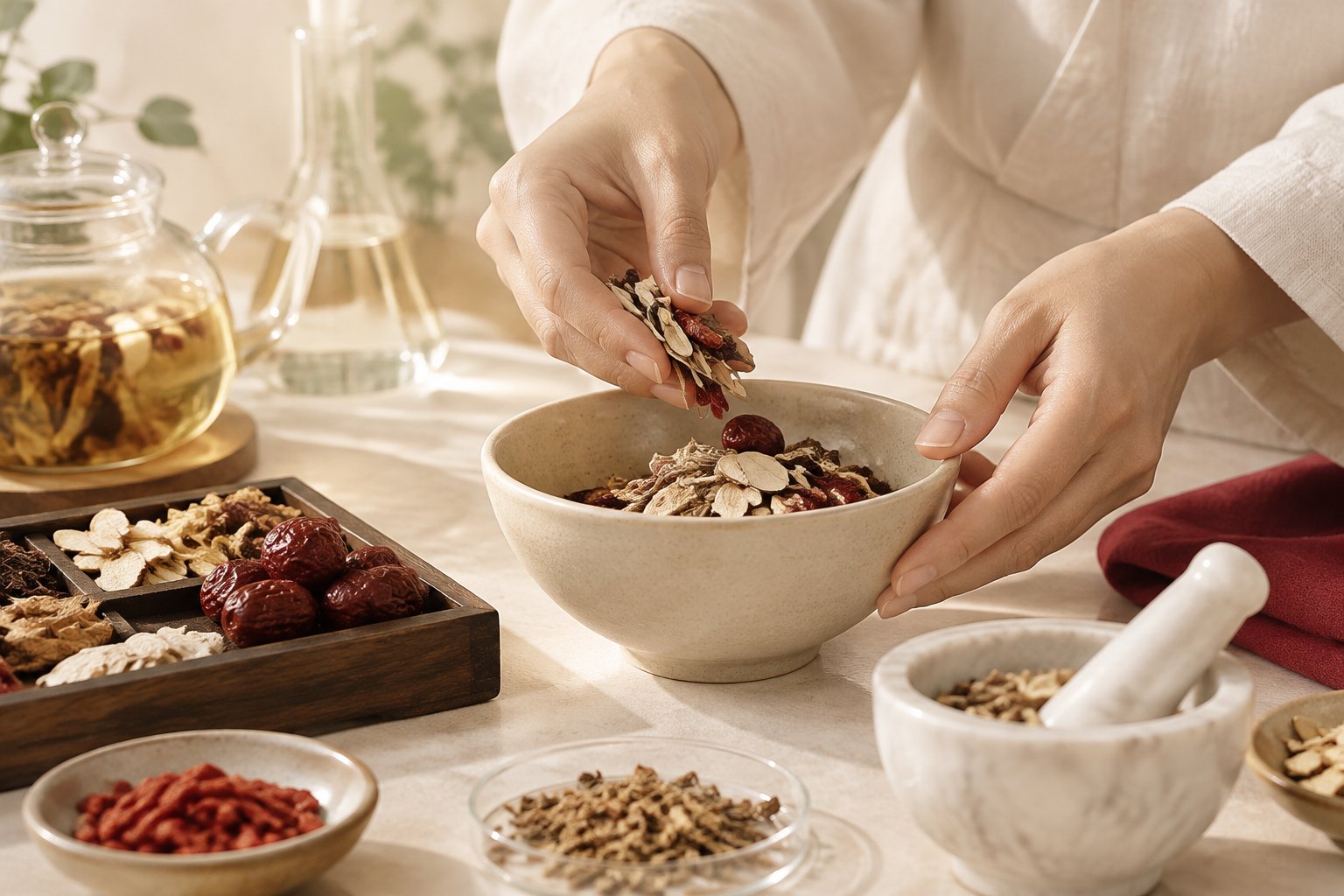
In 2008, Kyung Hee University promoted the establishment of a Korean medicine pharmaceutical company as a subsidiary of an industry-academic cooperation technology holding company. Dr. Bongha Ryu, Honorary Director, who was then director of Kyung Hee University Korean Medicine Hospital, participated in this process and considered the foundation needed for herbal medicine to be used more precisely in the treatment and prevention of disease, rather than remaining only in the area of tonics.
The company names reviewed at the time were Kyung Hee Pharmaceutical or Kyung Hee Korean Medicine Pharmaceutical, and the goal was to develop and produce herbal medicine preparations in a more standardized form. Herbal medicine prescriptions have developed based on long clinical experience, but in the modern medical environment, quality control of medicinal herbs, uniformity of formulations, and safety review must be in place together.
An important part of this discussion was the need for “verified medicines.” The direction was not to remain only with familiar preparations such as Uwhang Cheongsimwon and Ssanghwa-tang, but to organize various herbal medicine prescriptions within a system of research and quality control. Cheongin Troche, used for the purpose of treating sore throat from a Common Cold, and Wongi Saengmaeksan, used for fatigue recovery, were also mentioned as examples of these attempts at formulation.
While valuing the clinical experience it has carried on since 1904, Hoechundang Kyunghee Ryu Korean Medicine Clinic has maintained the principle that herbal medicine should be prescribed after considering constitution, symptoms, current medications, and current diseases together. The older a prescription is, the more careful examination and management it requires.
Standardization and safety review of herbal medicine preparations do not weaken the tradition of Korean medicine; they are a process for approaching patients with greater responsibility. Hoechundang will continue to preserve the value of traditional prescriptions while providing care that considers modern clinical standards and each patient’s individual condition.