
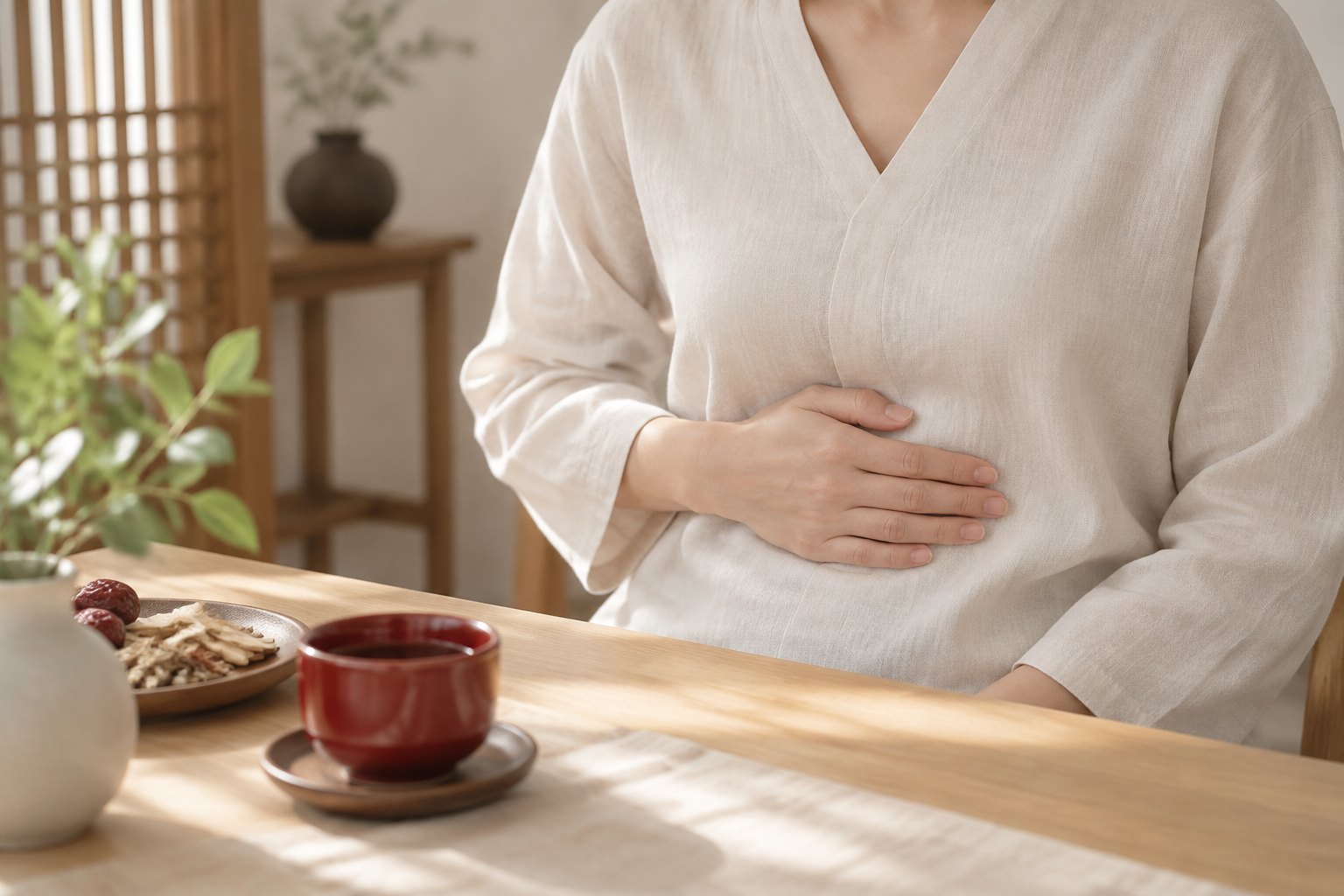
There is something I often hear in the consultation room: “The tests say I’m fine, but I always feel as if food is stuck, and when my stomach feels tight, my head feels heavy too.” When people eat in a hurry and then sit down to work for long periods, the stomach can easily lose the chance to move sufficiently. When this pattern continues for a long time, Korean medicine looks at the whole-body flow from the perspective of damjeok.
What Does Damjeok Mean?
Damjeok is a Korean medicine term for a pathological state in which food does not move downward well and burden accumulates in the stomach and intestines. When habits that interfere with gastric motility repeat, such as eating quickly, overeating, late-night eating, and irregular meals, bloating, frequent belching, nausea, acid regurgitation, constipation, or loose stools can easily accompany it. It is important to view it not as a single episode of indigestion, but as a state in which the rhythm of the stomach and intestines has been disrupted.
Why Do Headaches and Dizziness Occur Together?
When Digestion is blocked, the body uses more energy on the stomach and intestines than you might expect. Some people experience post-meal sleepiness, fatigue, a foggy head, and dizziness together. If acid reflux occurs often, they may also feel a lump sensation in the throat or chest tightness. This does not mean headaches always come from the stomach, so the pattern and accompanying symptoms should be distinguished and examined.
Function Can Be Unsteady Even if Tests Are Normal
Endoscopy or imaging tests are necessary to check structural problems such as mucosal damage, ulcers, and tumors. However, a separate examination may be needed to see how well the stomach moves and why post-meal bloating keeps recurring. In Korean medicine care, we look at eating habits, abdominal tension, tongue diagnosis and pulse diagnosis, and the timing of symptoms together, and if needed, refer to Electrogastrography to assess gastric motility.
Treatment Starts With Habits That Let the Stomach Rest
For indigestion with a damjeok pattern, we approach treatment by helping the balance of gastric motility and the autonomic nervous system through herbal medicine, acupuncture, moxibustion, and related care. At the same time, if the speed and amount of eating are not adjusted, symptoms can easily recur even after they lessen. If you are taking stomach medication or other medications, do not stop them on your own; it is safer to review them together according to your current condition.
We Recommend Consultation in These Cases
- When bloating and a stuck-food sensation repeat for more than 2 weeks
- When indigestion is often accompanied by headache, dizziness, and fatigue
- When endoscopy showed no major abnormality but discomfort after meals continues
- When relapses are frequent because it is difficult to correct late-night eating, binge eating, or fast eating habits
- If you have black stools, vomiting blood, unexplained weight loss, or difficulty swallowing, we recommend first receiving care at a medical institution.
A headache accompanied by sudden weakness in one arm or leg, slurred speech, or decreased consciousness should not be regarded as a Digestion problem; you should call 119 or go to the emergency room first. For usual recurring indigestion, you need an attitude of not rushing, but also not neglecting it. I first recommend slightly lengthening mealtimes, reducing late-night food, and setting up a treatment plan that fits your body.