
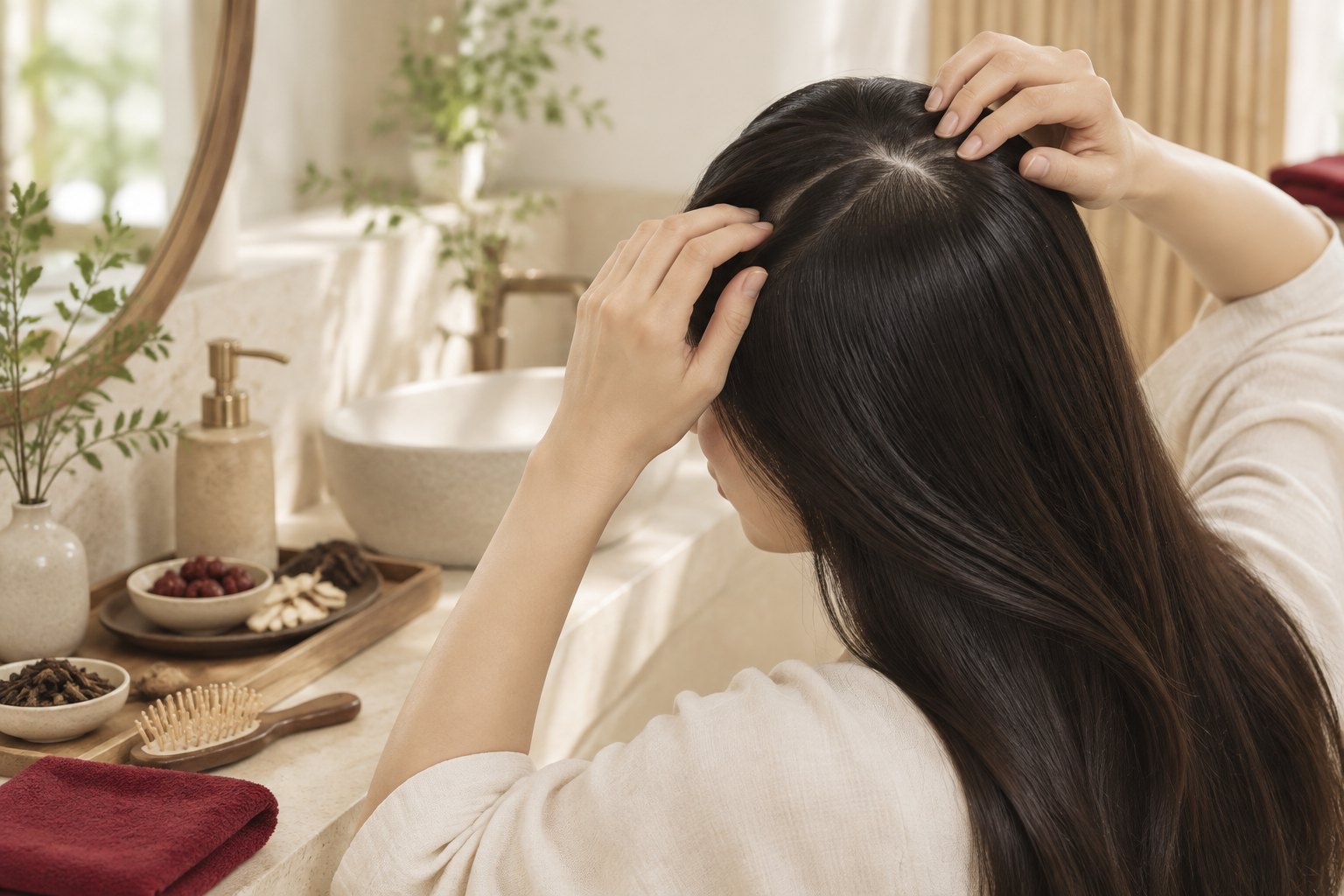
In the consultation room, I often hear from patients who lose sleep because their scalp is itchy and stings, or who feel stressed by flakes falling onto dark clothing. Some people think it is just dandruff and try to get by by changing shampoos, only to visit us after redness, oozing, and scabbing develop. Seborrheic scalp dermatitis is not only a surface Skin problem; sebum, inflammation, body heat and circulation, and Lifestyle habits are intertwined, making it easy to recur.
Dandruff and Seborrheic Scalp Dermatitis Are Different
Seborrheic scalp dermatitis is a chronic inflammatory Skin condition of the scalp. It often causes heavy scaling, hair that becomes oily quickly, and itching. When symptoms worsen, the scalp may become red and painful, or oozing and scabs may develop in scratched areas.
Because the scalp is covered by hair, it is difficult to check the degree of inflammation on your own. If it recurs for a long time, inflammation around the hair follicles may persist and be accompanied by thinning hair or increased shedding, so it is best to have persistent itching and scaling checked early.
Why It Feels Worse in Dry Seasons
In fall and winter, indoor heating, low humidity, and shampooing with hot water can make the scalp barrier drier. A dry scalp can itch easily even with minor irritation, and scratching can create a vicious cycle in which inflammation becomes deeper.
On the other hand, in people with more sebum, flakes can mix with oil and look thicker. For this reason, managing seborrheic scalp dermatitis should not simply focus on removing oil; it needs an approach that balances both sebum and dryness.
Precautions When Using Topical Steroids
When itching and red inflammation are severe, topical steroids may help in some cases. However, if strong preparations are used for a long time when they do not suit the scalp condition, or if they are used at one’s own discretion as symptoms improve and worsen repeatedly, the Skin can become sensitive and relapse management may become more difficult.
If you are already using a prescribed medication, please do not stop it suddenly on your own. We recommend discussing the duration and frequency of use with the Medical Team. In Korean medicine care, along with external management to calm inflammation, we examine the sensation of heat rising to the upper body and the state of metabolic circulation to decide the direction of internal treatment.
What Do We Look at in Korean Medicine Care?
People whose heat tends to rise to the scalp and whose face becomes red, those whose symptoms worsen after stress and lack of sleep, and those who feel bloated with Digestion and heavy in the body each need different treatment directions. I do not look only at the scalp; I also check Digestion, sleep, sweating, bowel movements, fatigue level, and Skin dryness.
Depending on constitution and symptoms, treatment may combine herbal medicine, acupuncture, pharmacopuncture, and topical scalp preparations. The goal is not simply to temporarily suppress itching, but to reduce the underlying tendency for inflammation to recur and create an environment in which the scalp can recover on its own.
We Recommend Consultation in These Cases
- When scalp itching and scaling repeat for more than 2 weeks
- When redness, oozing, scabs, or pain are also present
- When it recurs quickly even after using dandruff shampoo
- When you feel the hair at the crown or hairline is becoming thinner
- When Seborrheic Dermatitis, Psoriasis, atopic dermatitis, and folliculitis are difficult to tell apart
In daily life, it is important to avoid shampooing with hot water, not scratch with your fingernails, and dry the scalp thoroughly after washing your hair. Many people find that greasy foods, alcohol, and lack of sleep can disturb their symptoms, so keeping a record of any Aggravating Factors for you can be helpful during care.
Seborrheic scalp dermatitis may improve and then flare again, so rather than trying to eliminate it all at once in a hurry, it should be managed consistently while understanding your body’s patterns. If itching and scaling keep recurring, we recommend checking both your scalp and overall body condition.