
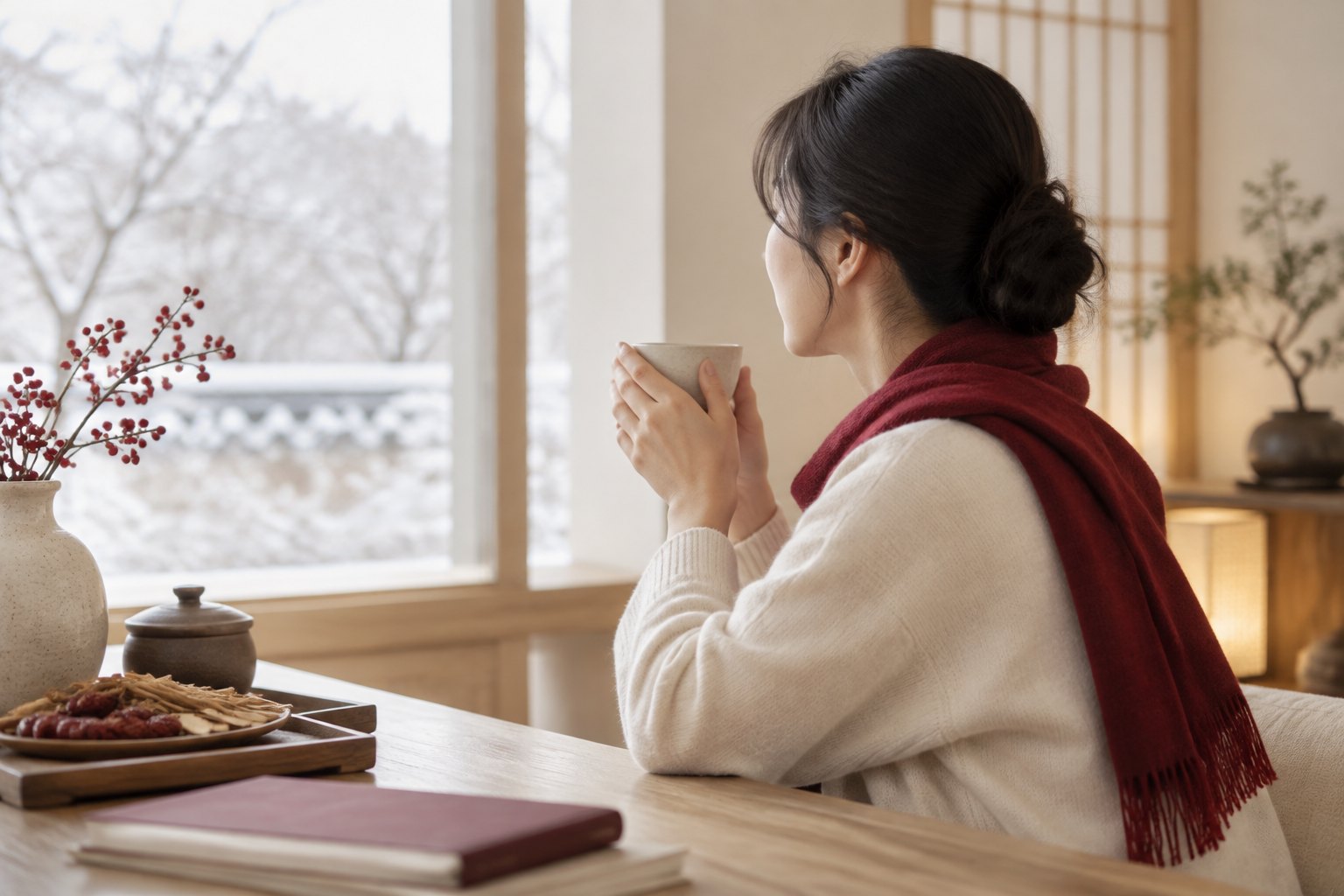
In the consultation room, I often hear people say they seem to live with a cold every winter. They feel briefly better after taking medicine, then the throat becomes scratchy again, the nose gets blocked, and the cough lasts a long time. In these cases, we need to look not only at the cough and runny nose in front of us, but also at the body’s ability to withstand external irritants and, in Korean medicine, the healthy qi and lung function.
Why the Respiratory System Weakens in Winter
Cold air and dry indoor environments can easily make the mucous membranes of the nose and throat sensitive. When the mucosa becomes dry, its defense against external irritants may decrease, and people who already have rhinitis or sinusitis may experience more discomfort from nasal congestion, postnasal drip, and phlegm. When the body is tired or sleep is lacking, recovery may also feel slower.
In Korean Medicine, We Look at the Lungs and Healthy Qi Together
In Korean medicine, the lungs are considered closely related not only to breathing, but also to the skin, nose, and defensive function of the body surface. For people whose colds recur or last a long time, we check whether healthy qi inside the body is deficient, along with treatment that helps release external pathogenic factors. The treatment direction may differ depending on whether you are especially sensitive to cold, sweat easily, have reduced appetite and digestion, or have accumulated overwork.
When Can Gyeongokgo Be Considered?
Gyeongokgo is a traditional formula based on ingredients such as ginseng, fresh rehmannia juice, poria, and honey. It may be considered as supportive care for people whose recovery after a cold is slow because fatigue has accumulated and energy has declined, or for those whose strength does not improve easily because stomach function is weak. However, the same amount and method are not suitable for everyone, so if you feel bloated, have a lot of heat sensations, or are taking medications, it is safer to decide how to take it after a consultation.
Lifestyle Management Is Also Part of Treatment
- Maintain appropriate indoor humidity, and drink small amounts of warm water before your throat feels dry.
- When going outside, keep the neck and nose warm so they are not exposed to cold wind for a long time.
- When you feel a cold coming on, reduce overwork, alcohol, and late bedtimes to secure time for recovery.
- If nasal congestion lasts a long time, you may breathe through your mouth and make the throat even drier, so manage rhinitis as well.
- Do not stop prescribed cold medicine, inhalers, antibiotics, or other medications on your own.
When We Recommend Medical Care
If a cough lasts 3 weeks or longer, or if yellow phlegm, recurrent fever, shortness of breath, or chest pain occurs together, we recommend seeking medical care. If breathing difficulty is severe, consciousness is reduced, or the lips turn blue, calling 119 or going to the emergency room should come before visiting a Korean medicine clinic.
Winter respiratory care is often not enough if it only responds after a cold develops. I look at the location of symptoms as well as strength, digestion, sleep, and reactions to cold, and I help in a direction that supports balance in the lungs and the body. Rather than lightly passing over repeated colds, I encourage you to check the weak links in your body.