
In the clinic, we often hear patients say, “My stomach does not really hurt, but I go to the bathroom many times a day.” Diarrhea often gets better after a few days, but if it repeats for more than 3 weeks or the number of bowel movements increases to around 4 times a day and interferes with daily life, it is important to pay attention to the body’s signals. Long-standing diarrhea can affect weight, energy, sleep, and even confidence about going out, so it should not be dismissed lightly.
Long-Lasting Diarrhea Does Not Have Just One Cause
Chronic diarrhea may be due to prolonged enteritis, but it can also be related to many causes, including Irritable Bowel Syndrome, food intolerance, medications, inflammatory bowel disease, and thyroid disease. From a Korean medicine perspective, we also look at weakened transformation and transportation function of the spleen-stomach, coldness in the lower abdomen with low energy, and stress disrupting bowel movement. For this reason, we do not approach it only by trying to stop diarrhea; we also check bowel movement patterns, abdominal coldness, appetite, fatigue, and the level of tension.
We Look at Stress and Decreased Stamina Together
In a past observational study of patients with chronic diarrhea, a considerable number of patients reported feeling significant stress in daily life. Even when alcohol, coffee, or smoking does not seem to be the direct cause, tension can make the bowel sensitive and lead to an urgent need to use the bathroom right after meals. Conversely, when long-term diarrhea lowers stamina, the bowel may become even more sensitive to small triggers, creating a vicious cycle.
Korean Medicine Treatment Differentiates Constitution and Diarrhea Patterns
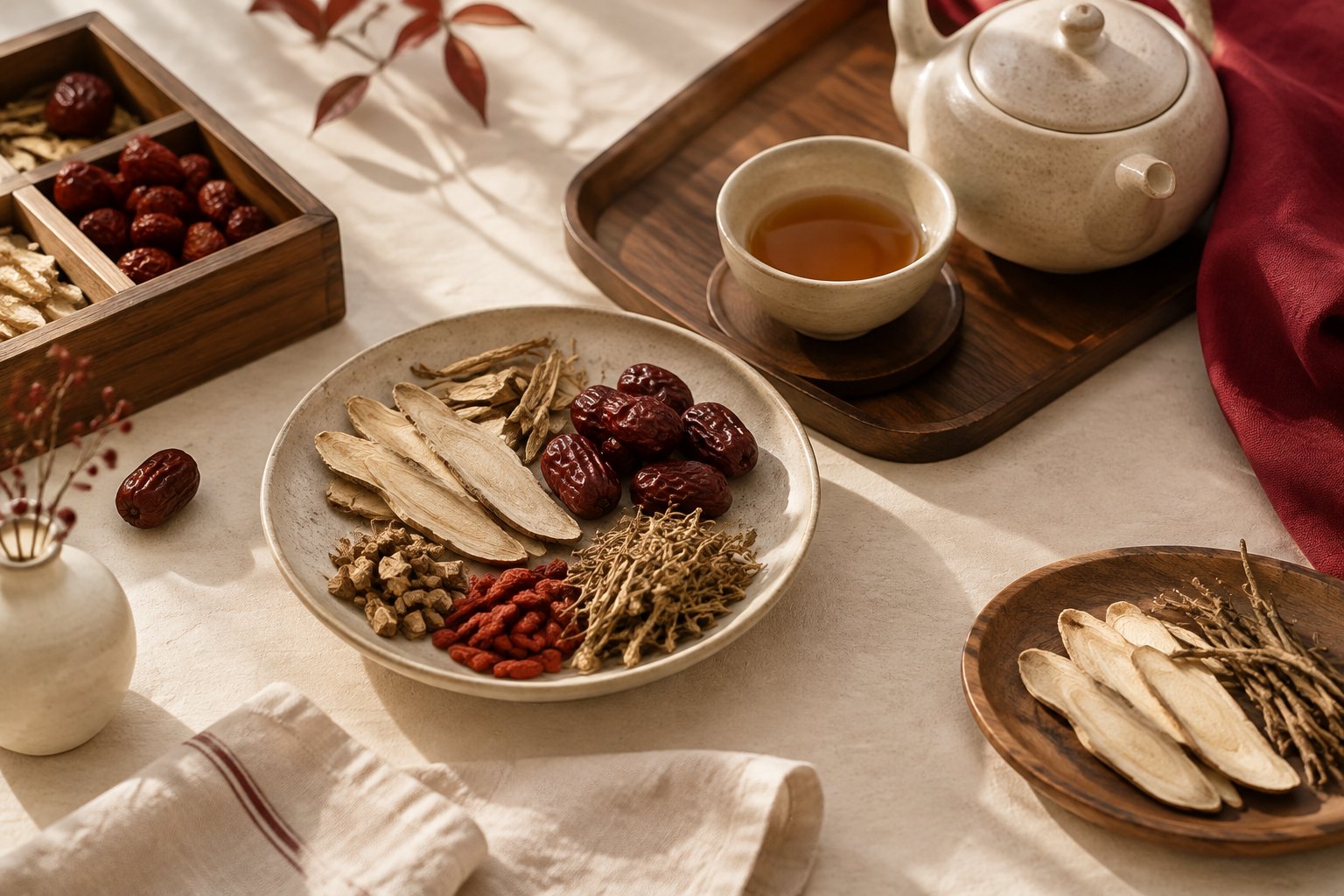
For patients with long-standing diarrhea, we carefully check stool looseness, whether there is abdominal pain, worsening after meals, early-morning diarrhea, cold hands and feet, sweating, and fatigue. Ginseng, astragalus root, atractylodes rhizome, poria, cinnamon bark, and other herbs may be used to support energy and warm the abdomen, and herbs such as Chinese yam and hyacinth bean may also be considered to help compensate for intestinal weakness. Strong-natured herbs such as aconite must be used only when needed after a medical visit, and prescriptions should be adjusted to each person’s condition.
We Recommend Medical Care in These Situations
- When diarrhea continues for more than 3 weeks or becomes increasingly frequent
- When blood is mixed in the stool or black stool appears
- When fever, severe abdominal pain, or unexplained weight loss occurs together
- When you repeatedly wake at night because of diarrhea
- When there are dehydration symptoms such as dizziness, decreased urination, or dry mouth
- When urgent symptoms such as paralysis, decreased consciousness, or severe dehydration are present, use 119 or the emergency room first
If you are taking antidiarrheal medication, bowel-related medication, diabetes medication, antibiotics, or other medications, do not stop them on your own, and please tell us about them during your visit. For food, reduce greasy dishes and cold beverages, and on days when symptoms are severe, it may be easier on the body to eat small amounts of warm, low-irritation meals. The longer chronic diarrhea is endured, the more it can narrow the range of daily life. We hope you take a step-by-step approach to recovery by looking not only at bowel problems but also at the balance of the whole body.