
There are things I often hear every summer in the clinic: “Even a small amount of a cold drink makes my stomach rumble,” and “The tests don’t show any major abnormality, but my diarrhea lasts a long time.” Diarrhea is more than the inconvenience of frequent bathroom trips; it can drain your energy, lower your appetite, and disrupt your daily rhythm.
Why do the intestines become sensitive in summer?
On hot days, body fluids are lost through sweat, and the abdomen can easily become cold from air-conditioning and cold foods. When this overlaps with raw foods, foods that spoil easily, changes in water while traveling, and overwork, the intestines may react more sensitively than usual. Even without bacterial enteritis, many people have repeated loose stools from fruit, frozen desserts, or cold drinks alone.
Acute diarrhea and chronic diarrhea need to be distinguished
In adults, if loose stools occur several times a day and are accompanied by abdominal pain, bloating, or urgent bowel movements, the cause should be reviewed. In particular, diarrhea that lasts more than 3 weeks is considered chronic diarrhea, and we check various possibilities, including Irritable Bowel Syndrome, inflammatory bowel disease, malabsorption, medication effects, and reduced bowel function after infection. When diarrhea lasts, it can burden not only water and electrolytes but also nutrient absorption.
During diarrhea, meals that irritate the intestines less come first
When you have diarrhea, it is important to eat in a way that gives the intestines time to recover rather than thinking only about “stopping it quickly.” I recommend first reducing habits that make the abdomen cold and excessively stimulate bowel movements.
- Temporarily reduce iced drinks, cold fruit, and frozen desserts.
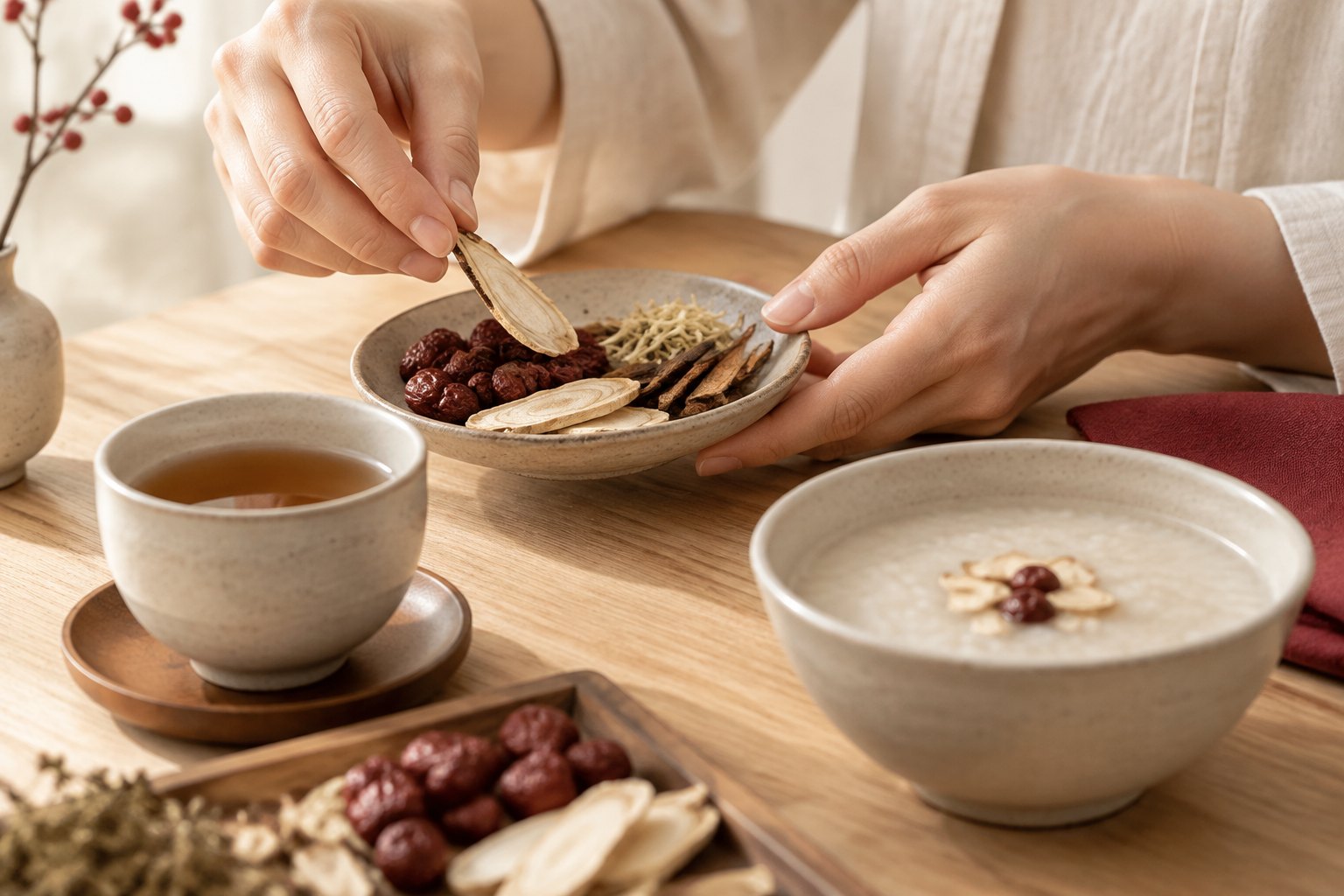
- Eat small amounts of soft, warm foods such as rice porridge, thin rice gruel, and warm broth.
- Avoid greasy foods, spicy foods, and alcohol, as they can further irritate the intestines.
- Observe whether diarrhea worsens after milk and dairy products or wheat flour foods.
- To prevent dehydration, drink small amounts of water often, and if you are vomiting, do not force yourself to eat.
In Korean medicine, we also look at coldness in the abdomen and low energy
Among people with chronic diarrhea, some show patterns such as cold hands, feet, and lower abdomen; easy fatigue; and decreased appetite. In Korean medicine care, we look not only at stool patterns but also at abdominal warmth, meal amount, weight changes, stress responses, sleep, and fatigue. As needed, we consider directions such as reducing the burden on the intestines and supporting digestive function, or warming and supplementing the body, according to the person’s constitution and condition.
We recommend seeking medical care in these cases
- When diarrhea continues for more than 3 weeks or repeatedly recurs
- When bloody stool, black stool, a high fever, or severe abdominal pain is present
- When weight loss, decreased appetite, and chronic fatigue appear together
- When dehydration is suspected, such as dizziness, dry mouth, or decreased urination
- When diarrhea persists in someone with an underlying medical condition, an older adult, a pregnant woman, or a child
If your consciousness becomes clouded, or if you have severe dehydration, a feeling of paralysis, or abdominal pain that is difficult to endure, you should first seek help from 119 or an emergency room. Summer diarrhea is common, but if it lasts a long time, it can disturb the balance of the whole body. Along with basic care such as reducing cold foods and eating warm foods, recurring diarrhea should be evaluated calmly to find the right treatment direction.