
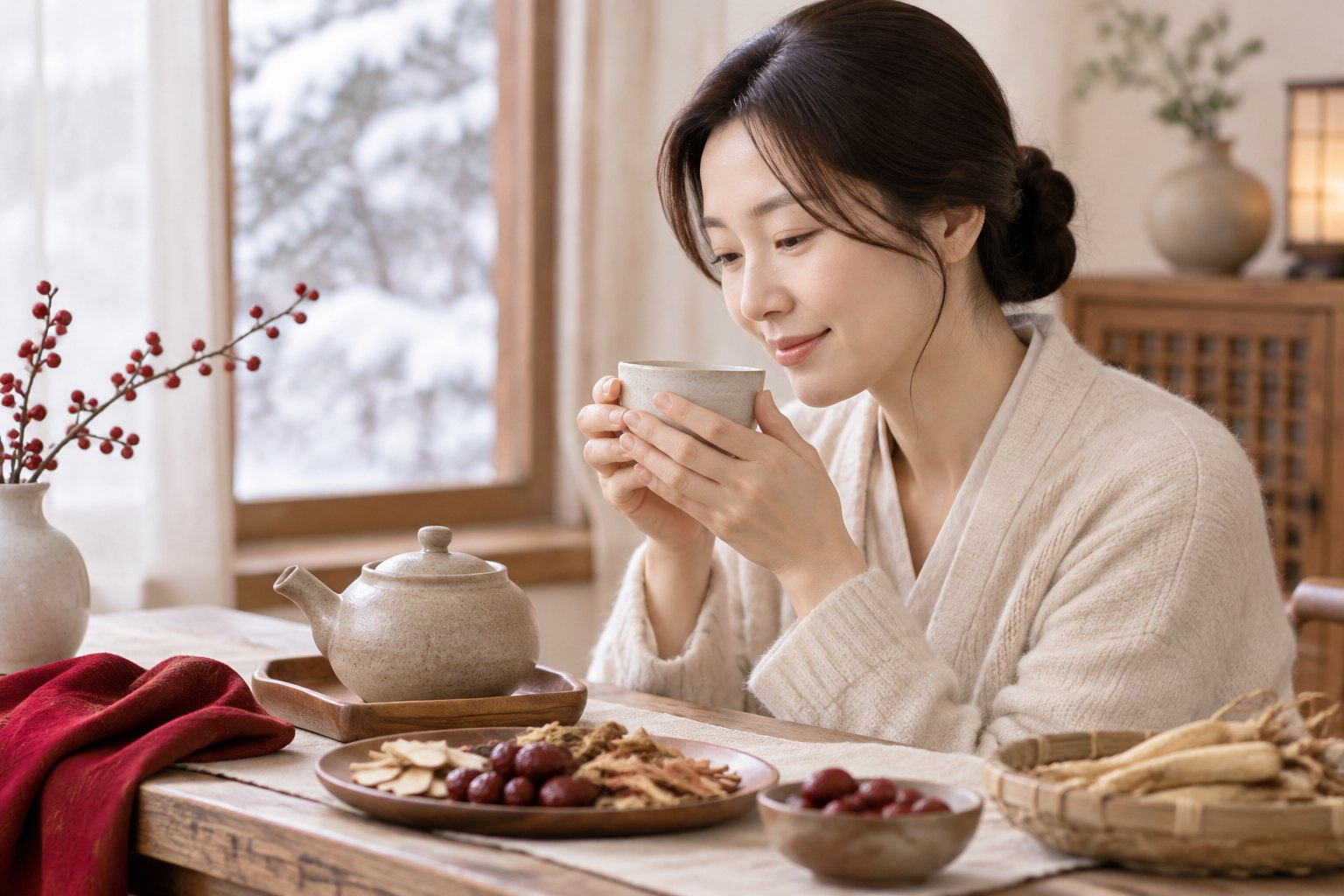
There is something I often hear in the clinic every winter: “Once I catch a common cold, it lasts a long time, and even after I get better, I catch it again soon.” When the weather gets cold, activity levels decrease, sleep rhythms can become disrupted, and indoor air becomes dry, making the defensive function of the nose and throat more likely to weaken. At times like this, rather than repeatedly taking only common cold medicine, it is necessary to look at both the body’s recovery capacity and the living environment.
Winter Common Colds and Zheng Qi in Korean Medicine
In Korean medicine, the body’s protective strength is described as zheng qi (正氣). When zheng qi is weakened, the body may be more easily affected by external cold energy or infectious stimuli, leading to frequent common colds and a longer recovery time. On the other hand, even if they look similar on the surface, a state with a lot of heat, a weak digestive system, or depleted body fluids from overwork requires a different prescribing direction.
Herbal Tonics Are Not the Same Medicine for Everyone
Winter herbal tonics are not simply medicines that make the body hot. The composition and dosage are adjusted depending on whether a person is constitutionally weak, whether their energy has temporarily declined due to recent overwork and stress, and whether underlying issues such as rhinitis, asthma, or digestive disorders are also present. In particular, older adults, infants and young children, and people with chronic conditions need careful care, as fatigue may remain for a long time after a common cold or symptoms may become more serious.
What to Check When Considering Gyeongokgo
Gyeongokgo is a traditional prescription made with ingredients such as ginseng, Poria cocos, Rehmannia glutinosa root, and honey, and has traditionally been used for weakness, dry fatigue, and restorative care during recovery. It is a relatively widely used herbal tonic, but it does not fit everyone in the same way. For those who feel bloated, have frequent diarrhea, need blood sugar control, are pregnant, or are taking multiple medications, we recommend a consultation before taking it.
Lifestyle Management Should Go Alongside It
- Keep indoor humidity around 40~60%, and drink water in small amounts throughout the day so the nose and throat do not become dry.
- Because insufficient sleep can make recovery capacity more likely to decline, keep consistent bedtimes and wake-up times.
- Use warm teas such as ginger tea, citron tea, or quince tea, but adjust the amount if you have heartburn or blood sugar control issues.
- Rather than intense exercise that makes you sweat, support circulation with light walking and stretching.
- Do not stop blood pressure medications, diabetes medications, anticoagulants, or other medications you are taking on your own; consult your medical team.
We Recommend a Consultation in These Cases
If you catch common colds several times even within one month, or if cough, fatigue, or loss of appetite continues for a long time after a common cold, we recommend checking your condition. If a high fever of 38 degrees or higher persists, or if shortness of breath, chest pain, dehydration, decreased consciousness, or paralysis symptoms occur, calling 119 or going to the emergency room should come before visiting a Korean medicine clinic.
Winter health care is not something that ends with one special medicine. When we look at your constitution and current condition, customize an herbal tonic if needed, and adjust sleep, humidity, and meals together, the body can pass through the season more steadily. If repeated common colds feel like a signal, we will calmly check your current lifestyle and energy level.