
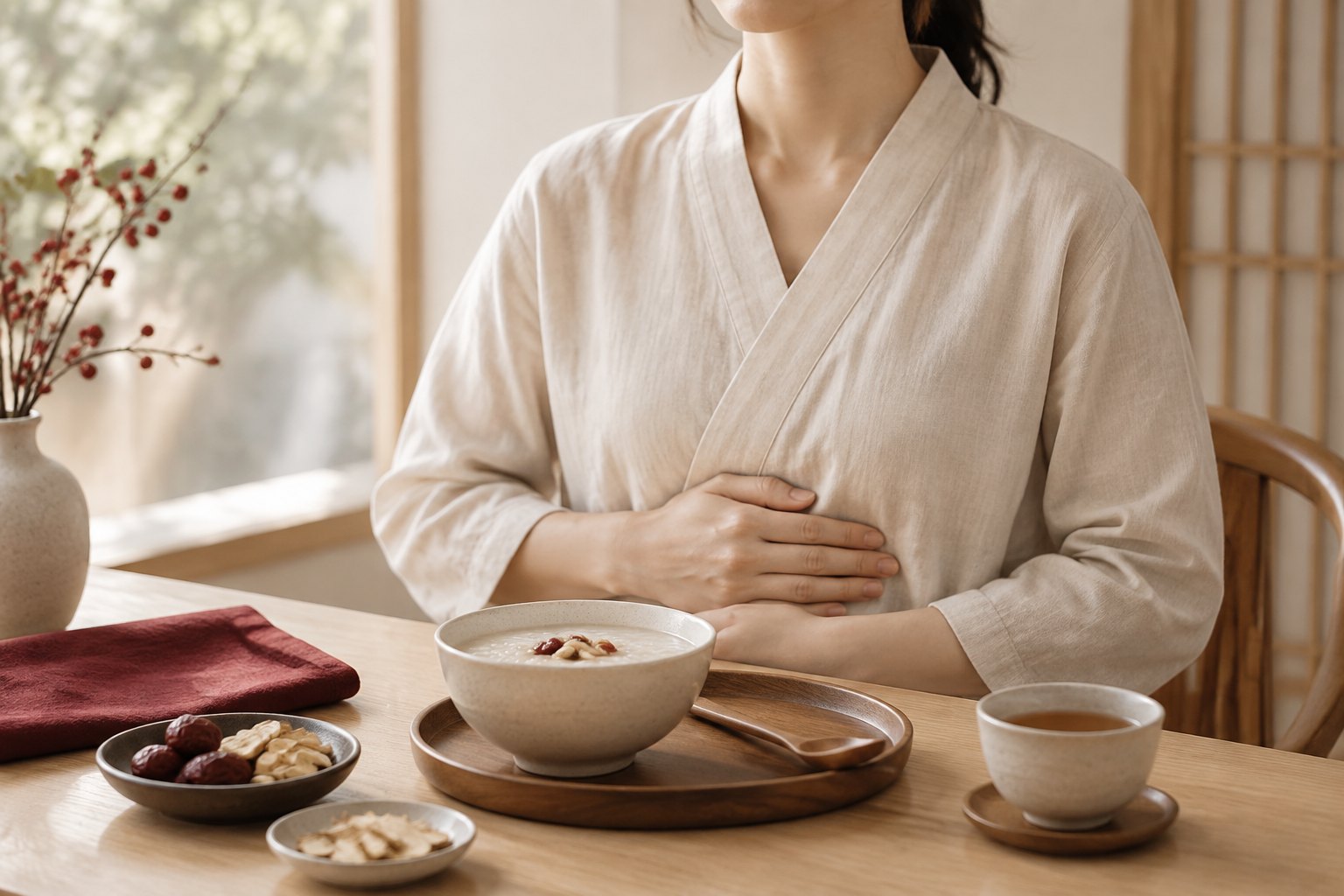
In the clinic, I often hear, “My tests were fine, but my stomach always feels uncomfortable and blocked.” If you feel full for a long time after eating, have gas buildup in your abdomen, and repeatedly feel heaviness in the upper abdomen, it is important to look at how your stomach is moving rather than only reaching for digestive medicine. In Korean medicine, we also view this kind of chronic digestive discomfort from the perspective of damjeok.
What does damjeok mean?
Damjeok refers to a state in which food does not move down smoothly and becomes stagnant, causing digestive function to slow and making the stomach feel heavy and as if it has hardened. Even when endoscopy or basic tests do not show clear inflammation or ulcers, symptoms may continue if stomach motility and digestive capacity have declined. For this reason, rather than defining damjeok as a single disease name, it is important to look together at functional dyspepsia, gastric atony, and lifestyle habits in care.
It does not appear only as indigestion
People suspected of having damjeok mainly complain of fullness, abdominal bloating, frequent belching, and tightness in the upper abdomen. If it continues for a long time, food intake may decrease, and whole-body symptoms such as fatigue, dizziness, and headaches may accompany it. Of course, these symptoms can also appear with other conditions, so the duration, aggravating factors, stool condition, and weight changes should be checked carefully.
Treatment aims to help the stomach move
I first look at constitution, eating speed, whether you eat late-night meals, stress and sleep status, and the degree of abdominal tension. Herbal medicine is formulated to help reduce the feeling of stagnation in the stomach and support recovery of digestive function. Acupuncture · moxibustion · cupping · heat therapy are selected to help abdominal circulation and stomach motility. If you are already taking digestive medication, it is safer not to stop it on your own and to discuss whether it can be used together based on your current condition.
Lifestyle management is the foundation of treatment
- Do not eat in a hurry, and avoid overeating at one meal.
- Check whether greasy foods, stimulating seasonings, and late-night snacks are related to your symptoms, and reduce them as needed.
- Do not lie down right after meals. Add low-burden movement such as light walking.
- On days when heartburn or fullness is severe, it is better to avoid coffee and alcohol.
- Lack of sleep and tension can reduce stomach motility, so maintain a consistent daily rhythm.
We recommend care in these cases
If indigestion repeats for more than 2 weeks or gradually worsens, or if you have weight loss, difficulty swallowing, signs of anemia, black stools, or vomiting blood, we recommend receiving medical care. In particular, if severe abdominal pain is accompanied by cold sweats or decreased consciousness, or if vomiting blood is clear, call 119 or go to the emergency room first.
Chronic stomach problems are often not the result of one meal in a day, but the result of time during which the stomach has become worn down. When we look at the flow of the whole body and why things keep stagnating, rather than only suppressing symptoms, the direction of care becomes clearer. Please do not endure recurring fullness for too long, and consider having your stomach condition checked.