
When I meet patients who come in for Seborrheic Dermatitis, I often hear, “It seems to get better, then it becomes red again,” or “The flakes that fall like dandruff bother me.” The face and scalp are highly visible areas, so the symptoms themselves are uncomfortable, and they can also create significant stress in relationships with others. When I evaluate Seborrheic Dermatitis, I look not only at inflammation on the Skin surface but also at sebum, heat sensation, daily rhythm, and the body’s circulation.
It Is Easy to Confuse With Acne
Seborrheic Dermatitis often appears in areas with active sebum production, such as around the nose, between the eyebrows, the cheeks, chin, around the ears, and the scalp. Redness, itching, stinging, greasiness, and white or yellow flakes may appear together. If bumps are also present, it can look like acne, making it easy to repeat strong cleansing or use irritating products; in that process, the Skin barrier may become even more sensitive.
Several Factors Overlap in Recurrent Inflammation
It is difficult to define the cause of Seborrheic Dermatitis as just one thing. Changes in sebum secretion, lack of sleep, stress, greasy or spicy foods, changes in balance with fungi, and lowered immunity can affect one another, causing symptoms to rise and fall. From a Korean medicine perspective, we also look at the pattern in which heat sensation gathers toward the face and head while the lower body becomes cooler—that is, an imbalance in circulation.
Touching Habits Can Lead to Worsening
When it is itchy and hot, you may scratch or peel off flakes without realizing it. However, repeated friction can create tiny wounds and increase oozing, scabbing, or stinging. If redness persists for a long time, the facial tone may look blotchy or flushing may appear more noticeable, so early management is important.
We Regulate Both the Outside and the Inside
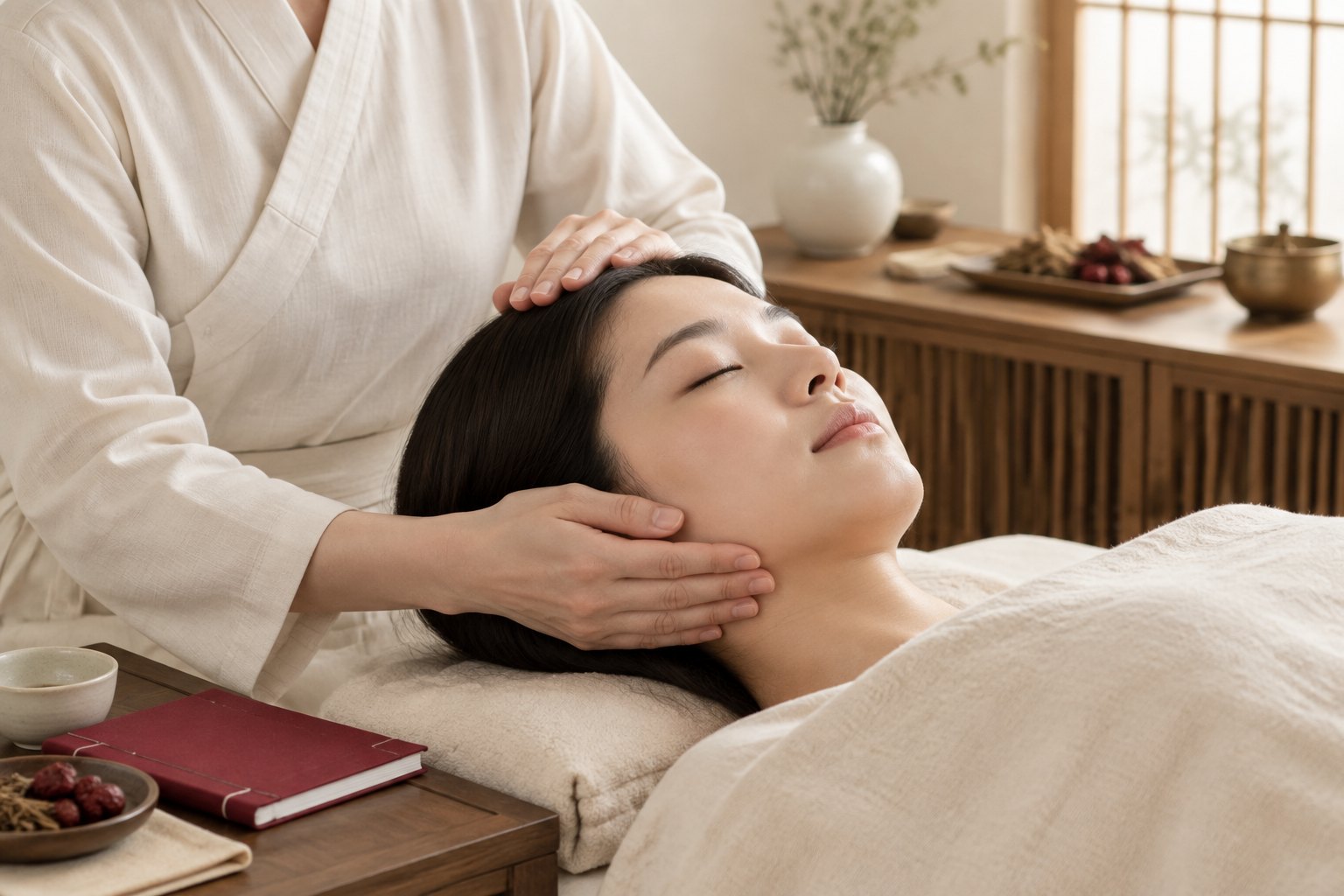
In Korean medicine care, we check the Skin’s heat sensation and inflammatory response, Digestion, fatigue level, sleep, sweating, and bowel patterns together. Depending on constitution and current condition, we select herbal medicine, acupuncture, moxibustion, pharmacopuncture, and other options, while also adjusting lifestyle habits to reduce Skin irritation. The goal is not only to relieve symptoms, but to make the body’s balance more stable so recurrence can be reduced.
When Consultation Is Recommended
- When redness, flaking, or itching of the face or scalp recurs for more than 2 weeks
- When oozing, scabs, or pain develops, or scratched areas spread
- When symptoms recur quickly even after using steroids or antifungal agents
- When dandruff and scalp itching make daily life uncomfortable
- When flushing worsens and the Skin heats up easily
At home, I recommend starting by reducing hot-water face washing, excessive scrubbing, frequent alcohol use, and late-night meals. If you are already applying or taking medication, do not stop it on your own; it is safer to check your current condition first and then adjust as needed. Recurrent seborrheic dermatitis is a condition that requires steady observation and personalized management.