
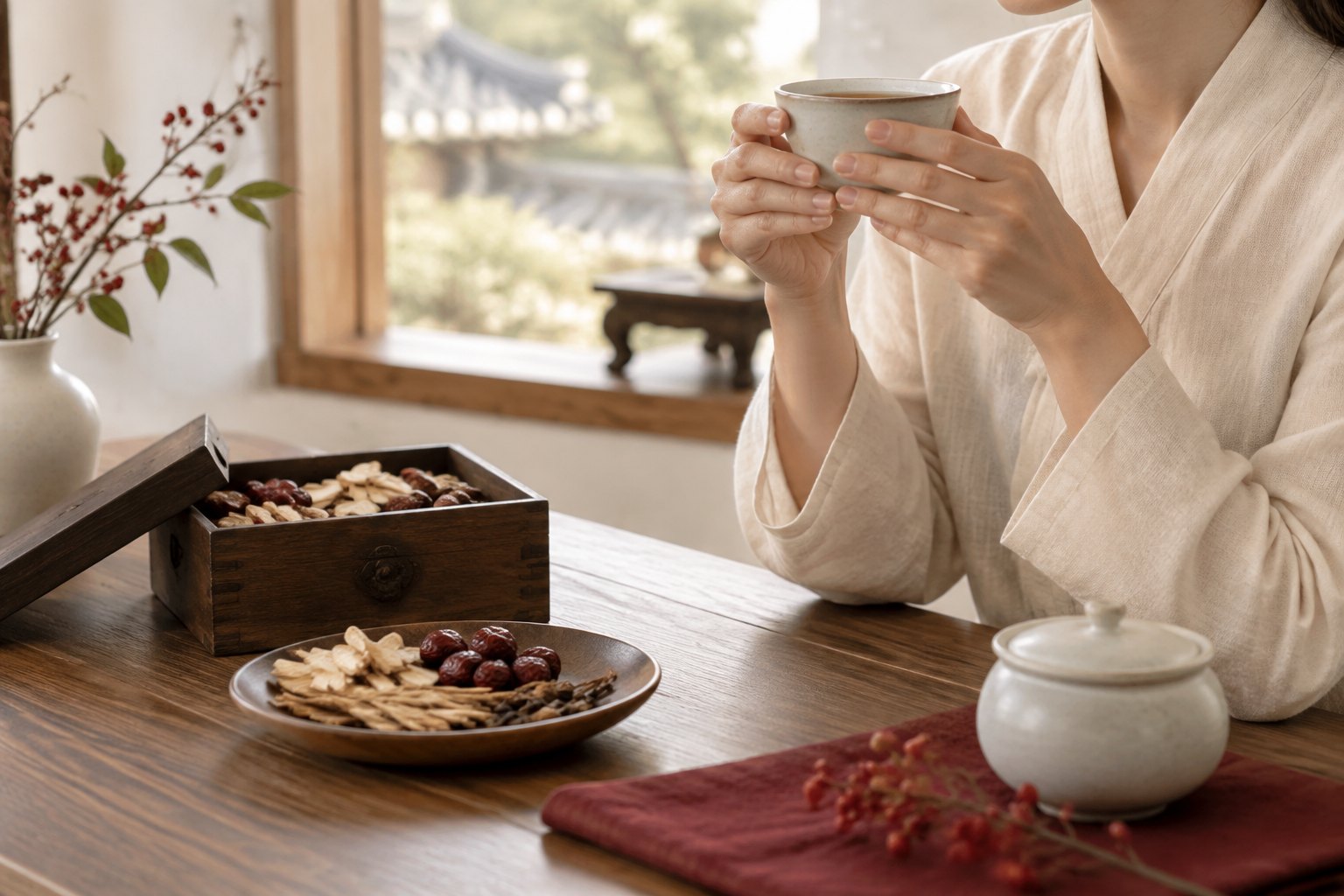
In the clinic, I often hear patients wonder whether they should take an herbal tonic because they feel tired. Many say they do not feel refreshed even after sleeping, their concentration drops in the afternoon, and their digestion is not what it used to be. In these situations, herbal medicine can be considered as a way to support a tired body, but rather than choosing something simply because it is said to be good for fatigue, it is important to first understand how your body is becoming depleted.
Even the same fatigue can have different causes
Some people have low energy from overwork and lack of sleep, while others have weakened nutrient absorption due to irregular meals. Some have long-term stress that causes chest tightness and shallow sleep, and some have a weak stomach, so even strengthening formulas can feel burdensome. When I prescribe an herbal tonic, I look at the pattern of fatigue, digestion, weight changes, sweating, urination and bowel movements, sleep, pulse, and abdominal examination findings together.
Uses of Gongjin-dan, Gyeongokgo, and Chongmyeong-tang
Gongjin-dan is a pill formula based on deer antler, angelica root, cornelian cherry, musk, and other ingredients. In traditional medical texts, it has been discussed as a prescription that supports vital energy and helps the body’s balance. Recently, research findings on various topics related to Gongjin-dan, including nerve cell protection, have been reported. However, suitability can vary depending on your constitution and current condition, so it is best to take it after a medical consultation.
Gyeongokgo can be considered for long-lasting weakness, a sense of depletion in a lean body type, and fatigue accompanied by dryness. Because of its name, Chongmyeong-tang is often thought of only as a formula for students preparing for exams, but in practice, tension, sleep, and digestive status should all be considered before choosing it. More important than the prescription name is whether your body currently needs replenishment, whether circulation needs to be eased, or whether the stomach should first be made comfortable.
What to check before taking an herbal tonic
- If you are being treated for high blood pressure, diabetes, or heart, liver, or kidney disease
- If you are taking medications such as anticoagulants, antiplatelet drugs, or hormones
- If you are pregnant, preparing for pregnancy, or breastfeeding
- If you have marked heat sensations, palpitations, insomnia, or indigestion
- If growth status and weight should be considered together, as in children and adolescents
In the situations above, we recommend receiving care rather than choosing an herbal tonic on your own. If you are taking Western medications, do not stop them on your own. Bringing the medication names or prescriptions to your Korean medicine clinic visit can help us review them safely.
The effect of herbal tonics goes together with lifestyle management
- Secure enough sleep first, and keep bedtime and wake-up time consistent.
- Do not skip breakfast, but if digestion is weak, prioritize warm meals and regularity over quantity.
- If you are relying on caffeine for long stretches, try reducing your afternoon intake.
- Support circulation with light walking and stretching, but do not exercise to the point of exhaustion.
An herbal tonic is one treatment method for filling what is lacking; it is not a means to keep enduring an overly demanding lifestyle unchanged. At Hoechundang, we look at the flow of long-standing fatigue, constitution, and stomach condition together, and tailor the needed prescription and lifestyle management. If recovery has been unusually slow lately and daily life feels burdensome, we encourage you to calmly check whether this may be the time for support that fits your body.