
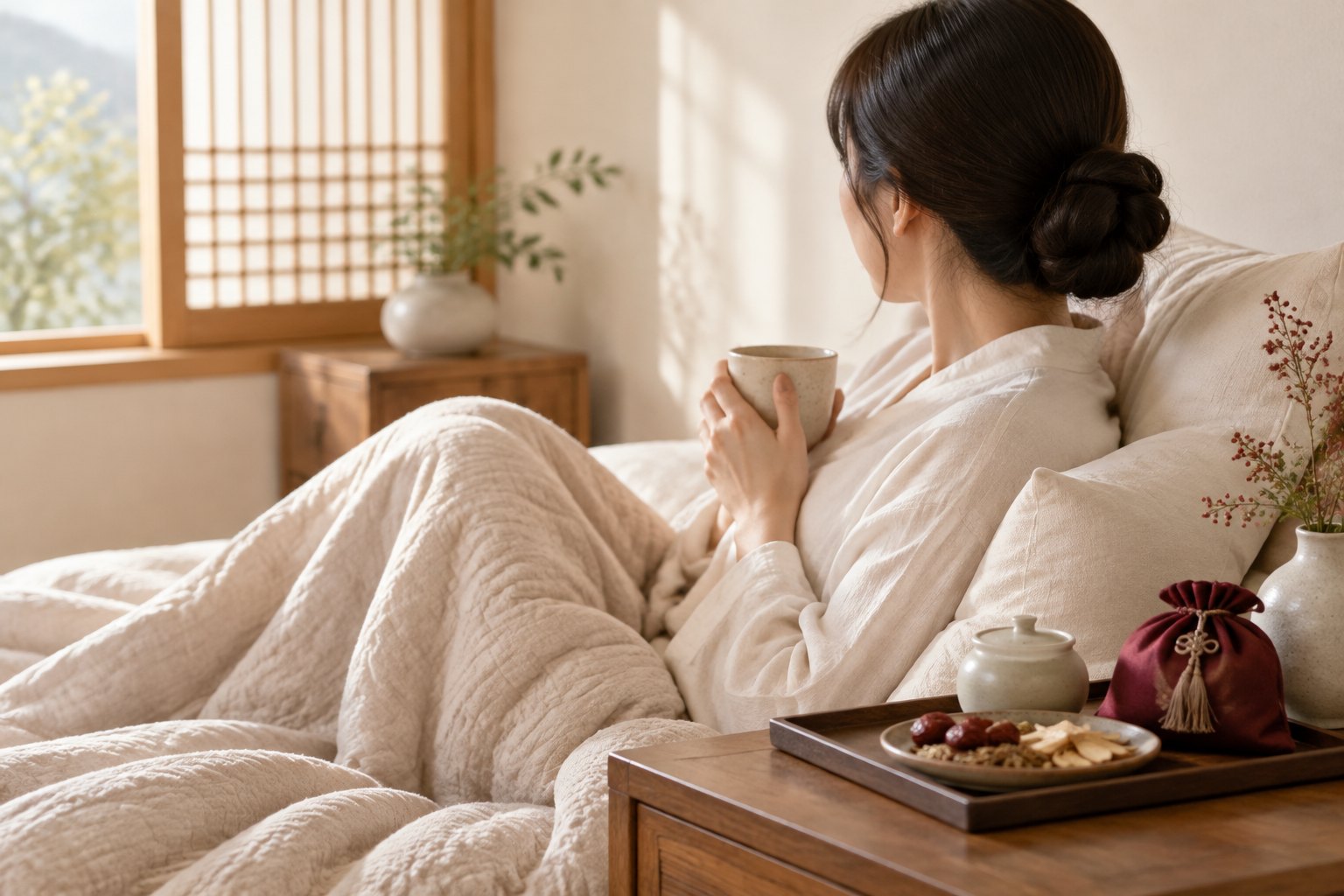
One of the concerns postpartum mothers most often bring up in the clinic is weight. When pre-pregnancy clothes do not fit and swelling lasts, it is natural to feel impatient. However, the body right after childbirth is closer to a body that needs recovery than a body that needs to lose weight. Before making a postpartum diet plan, I recommend first checking the state of qi and blood, joints, and uterine recovery.
Why does the body become weak right after childbirth?
During childbirth, there is significant blood loss and physical exertion, and afterward, recovery continues as lochia is discharged. Through pregnancy and childbirth, the joints and ligaments become looser than usual, and when lack of sleep and breastfeeding overlap, fatigue can deepen easily. If sensations of coldness, cold aching in the joints, cold sweats, lack of energy, and depressed mood appear together during this period, the body’s condition can be considered within the category of postpartum wind.
Postpartum restorative herbal medicine has different purposes depending on timing
Postpartum herbal medicine is not used in the same way for every mother. Right after childbirth, we check whether blood stasis and lochia are being discharged smoothly and what abdominal pain or swelling is like, then decide the direction of the prescription. When lochia decreases and the body enters the recovery stage, we adjust the approach toward replenishing qi and blood and caring for the uterus and physical strength.
Deer antler is an herb considered in postpartum restorative herbal medicine for mothers who have used up a lot of qi and blood. However, it is not used in the same amount and combination for everyone, and we need to consider whether there is strong heat sensation, weak digestion, or discomfort during breastfeeding. If joint pain is prominent, herbs that support musculoskeletal recovery are added, and if insomnia, anxiety, or depressed mood are significant, we also consider an approach to help calm the mind and body.
The order of recovery comes before dieting
The period from 6 weeks postpartum to around 100 days is a time to carefully support the body’s basic recovery. If you sharply reduce food intake or start intense exercise at this time, fatigue can accumulate and place strain on breastfeeding and joint recovery. It is good to check the course of the puerperium, start with light walking and stretching, and approach weight control step by step after the body’s condition has stabilized.
- Do not expose the body to cold, and change out of wet clothes right away after sweating.
- Eat protein, warm soups, and easy-to-digest meals regularly.
- Reduce postures that strain the wrists, knees, and lower back, and check breastfeeding posture often.
- During periods of insufficient sleep, reduce excessive activity and secure recovery time first.
When we recommend a consultation
- When lochia suddenly increases, or is accompanied by a bad odor, fever, or severe abdominal pain
- When cold aching and pain in the joints last a long time, or when it is difficult to use the wrists or knees
- When depressed mood, anxiety, or insomnia are severe enough to make childcare and daily life difficult
- When you want to start weight loss but are concerned about breastfeeding and reduced stamina
If you have a severe headache, vision changes, difficulty breathing, severe pain and swelling in one leg, decreased consciousness, or thoughts of self-harm, do not delay; you should first get help from 119 or the emergency room. Postpartum Care is not simply a period of rest, but a process of rebuilding your health for the future. Following the proper order of recovery rather than rushing weight loss is a way to care for a mother’s body and mind in a stable way.