
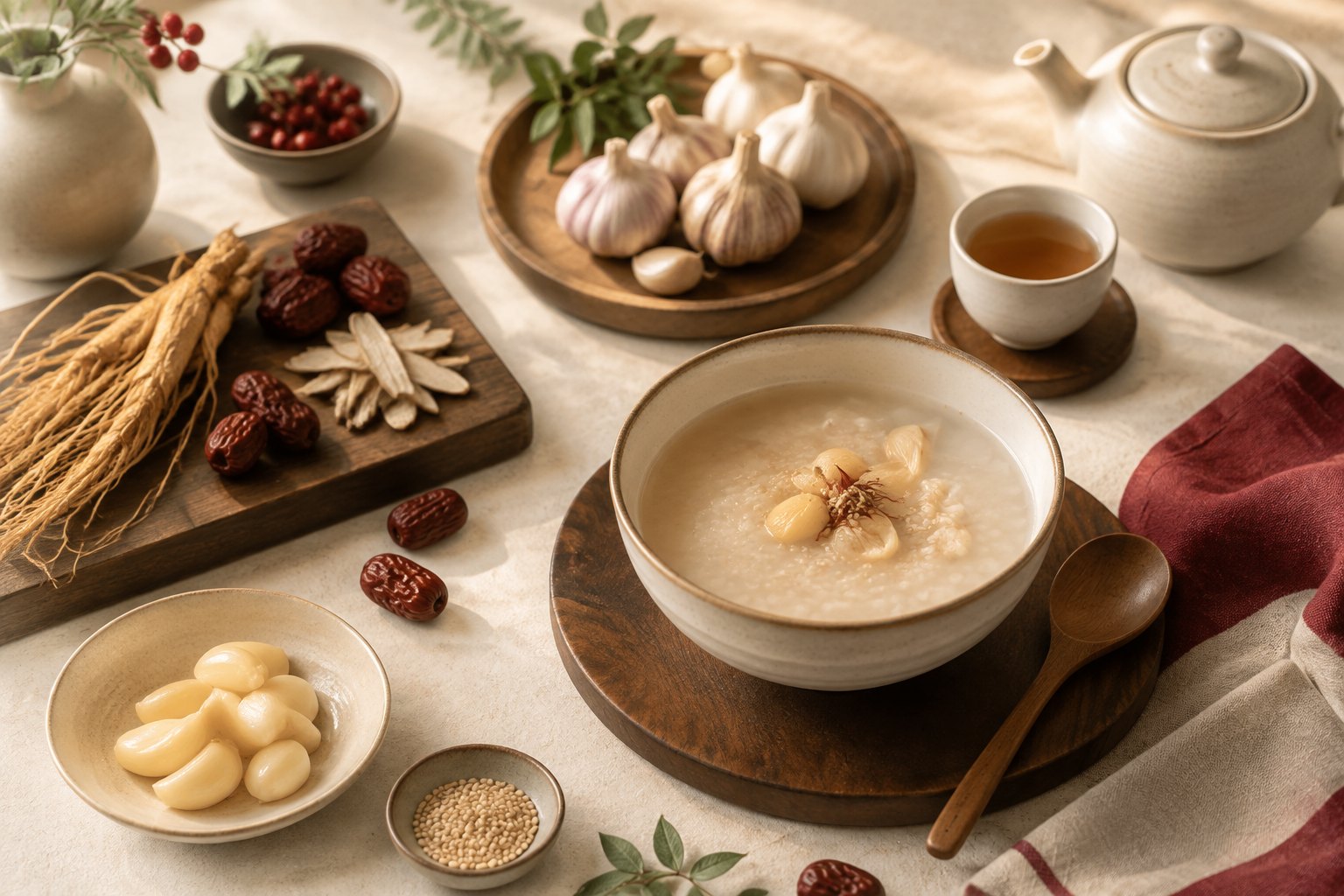
Patients who come to the clinic with Irritable Bowel Syndrome often ask, “I heard garlic is good for the intestines. Is it okay to eat a lot?” Garlic is a familiar ingredient on our table, but for people with sensitive intestines, it may be helpful or burdensome depending on the body's condition and how it is eaten.
Garlic's warming nature and intestinal movement
In Korean medicine, garlic is viewed as a pungent, warming food. People whose abdomen feels cold, whose digestive strength is low, and who often have loose stools may need a direction that warms the lower abdomen and supports spleen-stomach function.
Garlic is also used as an ingredient that reduces the smell of meat or fish and adds flavor to food. In addition, because of its strong aromatic components, it has long been used as a food that helps with sterilizing and antibacterial effects and detoxification.
When it may help Irritable Bowel Syndrome with frequent diarrhea
Irritable Bowel Syndrome is a condition in which abdominal pain, abdominal discomfort, diarrhea, or constipation repeats even though no major abnormality is found on testing. Many people find that their intestines react more sensitively when meals are irregular, drinking is frequent, and stress accumulates.
Among them, if your abdomen feels cold, you tend to go to the bathroom soon after meals, or diarrhea repeats when you are nervous, eating a small amount of cooked garlic may be relatively comfortable. However, garlic is not suitable for all abdominal pain and diarrhea, so it is difficult to say that the more you eat, the better.
When raw garlic is burdensome
For people with heartburn or severe gastritis, or those with gastric or duodenal ulcers, the spicy irritation of raw garlic can increase discomfort. If your face flushes easily, your mouth is dry, and you tend to have a lot of heat, it is better to avoid excessive intake.
If the smell of garlic feels burdensome, the aroma may become much milder when eaten with protein-containing foods such as meat, fish, eggs, or milk. If your intestines are sensitive, I recommend trying a small amount of cooked garlic during meals rather than eating raw garlic on an empty stomach.
Eat it in a gentler way
- Rather than eating a lot raw, eat it cooked, such as steamed, grilled, or oven-cooked.
- You can also soak it in vinegar to reduce the spicy irritation and then consume a small amount.
- On days when abdominal pain or diarrhea worsens, reduce it for a while and observe your intestinal condition.
- Alcohol, late-night meals, and irregular eating are likely to worsen Irritable Bowel Syndrome, so adjust these together.
When we recommend a Consultation
- When repeated diarrhea and abdominal pain make daily life uncomfortable
- When constipation and diarrhea alternate and you feel diet adjustment alone is difficult
- When you have heartburn or epigastric pain and discomfort increases after eating garlic
- If bloody stool, fever, weight loss, or diarrhea that wakes you at night is present, we recommend receiving medical care. If you have sudden severe abdominal pain or decreased consciousness, use 119 or the emergency room first.
Garlic is a food that may be used at the table for people whose intestines tend to be cold and who often have diarrhea. However, Irritable Bowel Syndrome can involve constitution, gastrointestinal condition, stress, and eating habits together. Distinguishing the foods that suit your bowel from the irritants you should avoid is the first step in treatment and management.