
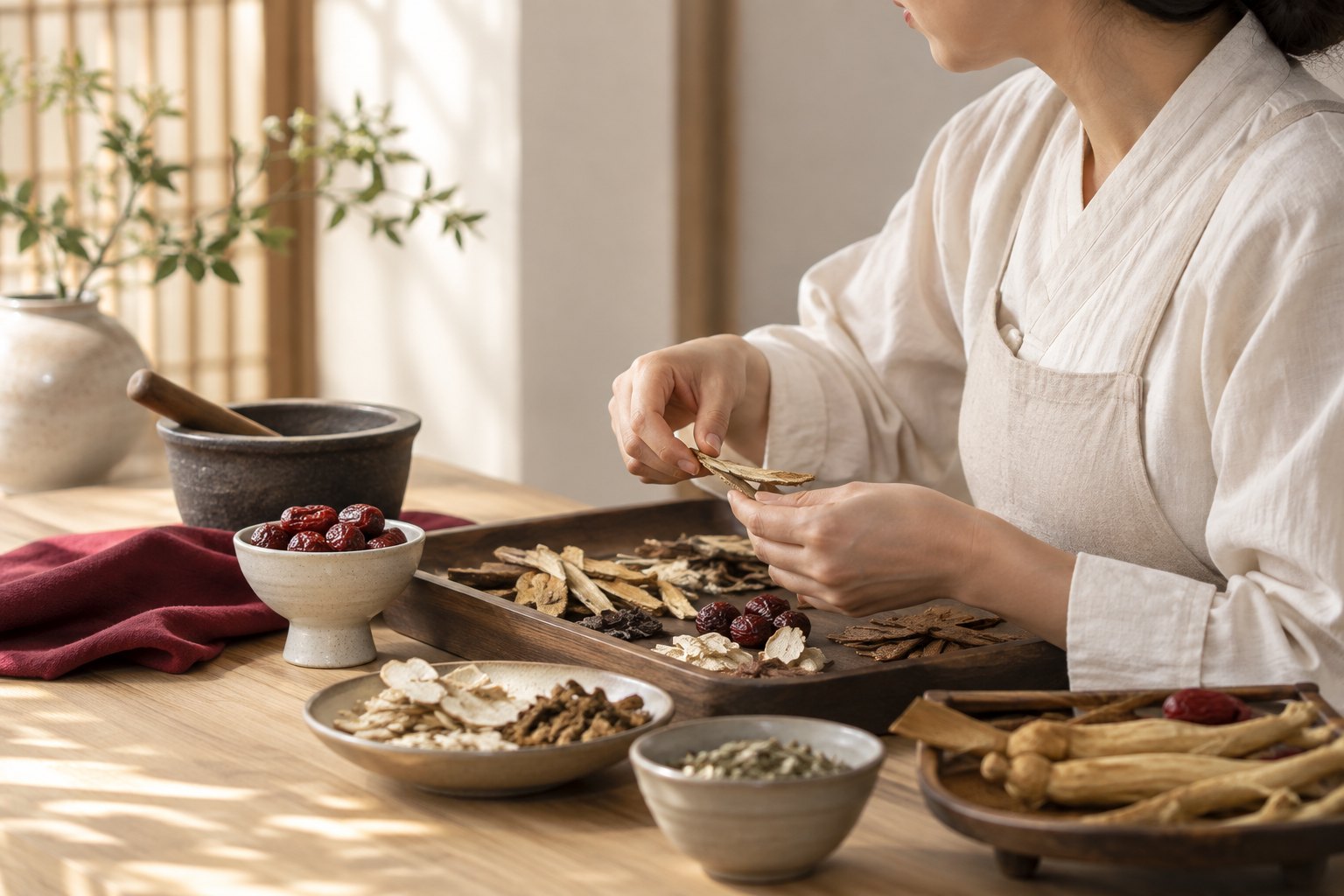
In the clinic, many people ask about dishes made with herbal ingredients because they want to eat healthy foods. Familiar herbs such as jujube, astragalus root, and angelica root can be used relatively comfortably when combined with food, but I do not recommend eating them repeatedly for a long time simply because they are “good for the body.” Medicinal food is not just a nourishing dish; it belongs to the area of food therapy, applied to the table while observing the body’s condition.
Medicinal Food Is a Harmony of Food and Herbal Ingredients
From the perspective of Korean medicine, medicinal food is prepared by matching the qi of herbal ingredients with the nature of food. Some people need ingredients that warm and tonify, while the same ingredients can feel burdensome for those who have a lot of internal heat, dry mouth, and a face that flushes easily. What matters is not adding many precious ingredients, but checking whether they match the direction your body currently needs.
There Are Two Main Purposes
Medicinal foods can be viewed as having two main purposes: adding energy to daily life and helping lifestyle management by easing uncomfortable symptoms. For those with long-lasting fatigue and poor appetite, those in recovery, or those whose digestion and stamina are not what they used to be with age, we look at the direction of strengthening. If there are clear discomforts such as bloating, frequent diarrhea or constipation, coldness, or a feeling of heat, it is safer to identify the cause first and then choose ingredients.
Matching the Season Can Reduce Burden
In spring, we help the body’s circulation arise smoothly. In summer, we pay attention to fluids and energy that can be easily depleted by heat. In autumn, we consider dryness, and in winter, warmth and the power of storage. Even when using the same chicken and herbs, the accompanying ingredients, amount, and cooking method can vary depending on the season and constitution. In particular, people who sweat a lot and easily feel hot should not repeatedly eat only warm nourishing foods without consideration.
Basic Principles for Use at Home
- Start with a small amount of any herbal ingredient you are using for the first time and observe your body’s response.
- If your digestion is usually weak, avoid oily and heavy cooking methods.
- If you are pregnant or breastfeeding, or for children and older adults, we recommend Consultation before use.
- If you are taking medications such as blood pressure medicines, diabetes medicines, or anticoagulants, do not stop them on your own; review them together.
- If you have liver or kidney disease or a history of allergies, you should be more careful when choosing herbal ingredients.
When Consultation Is Recommended
If heartburn, diarrhea, palpitations, or Skin rashes repeatedly occur after eating health foods, stop them and seek care. If fatigue is severe enough to make daily life difficult, or if it is accompanied by weight loss, bloody stool, or persistent fever, it is better not to treat it as a simple need for nourishment. For emergency symptoms such as sudden paralysis, decreased consciousness, or severe chest pain, use 119 or the emergency room first.
I think of medicinal food as “a small prescription added to the everyday table.” However, just as prescriptions differ from person to person, medicinal foods also need to match constitution, season, and living environment to feel comfortable. Even familiar ingredients, when adjusted to your body, can make meals a more reassuring form of health management.