
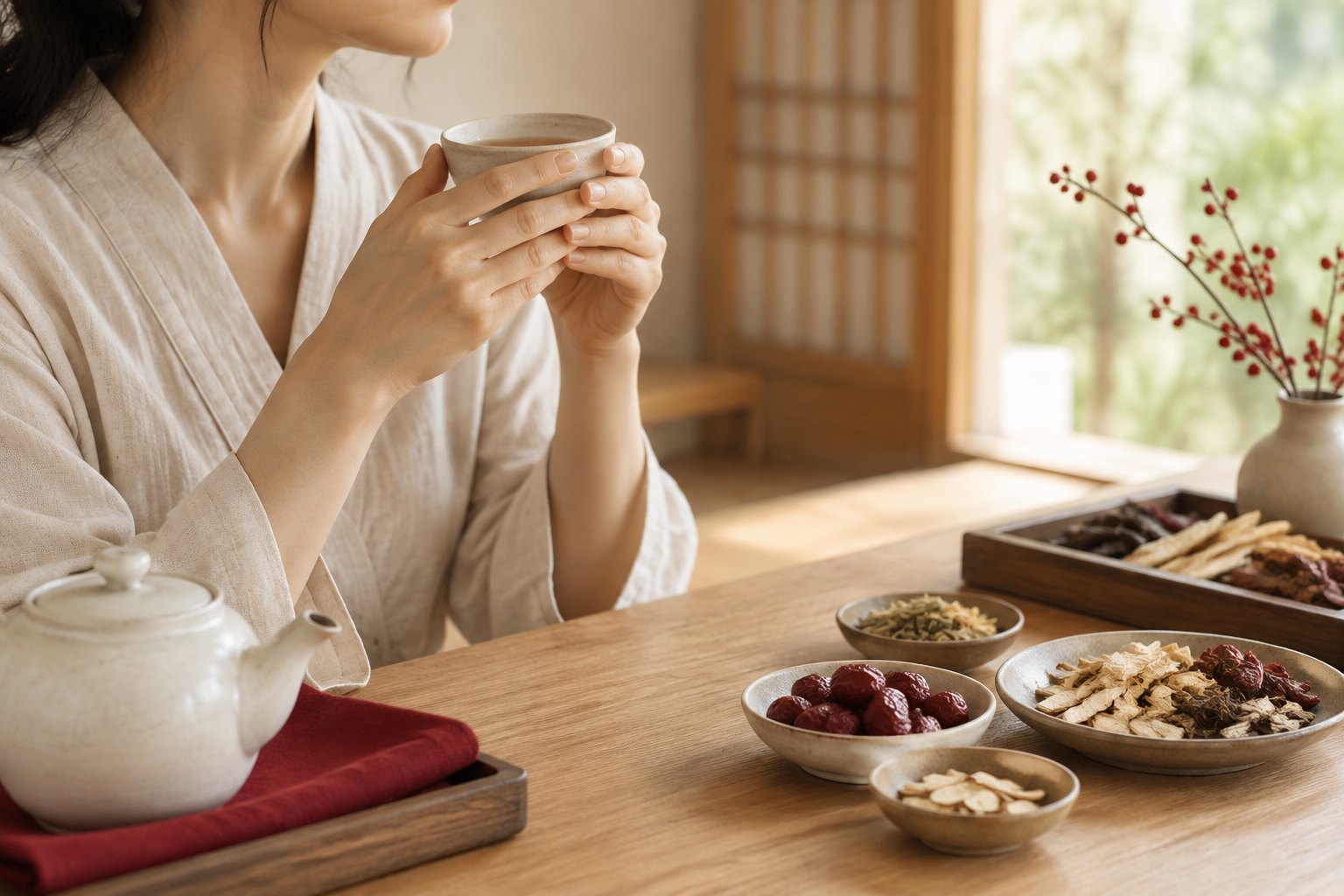
In the winter clinic, I often hear patients say that their body gets cold easily, a common cold lasts a long time, and fatigue does not go away even after sleeping. At times like this, people think of herbal tonics, but a tonic is not simply medicine that boosts energy. It is a prescription that looks at what the body is currently using up and helps restore balance. I recommend first calmly checking meals, sleep, urination and bowel movements, stress, and areas that are usually weak, then making a winter health plan.
A herbal tonic begins with understanding the body's condition
In Korean medicine care, pulse diagnosis is an important clue, but the prescription is not decided by the pulse alone. We also look at complexion, tongue condition, abdominal tension, cold or warm hands and feet, digestive strength, and the time of day when fatigue becomes worse. Even for the same fatigue, the direction of the prescription changes depending on whether qi and blood are deficient, damp-phlegm has accumulated in the body, or overwork and tension have driven heat upward.
What matters more than the form is whether it fits you
Herbal tonics can be prepared in many forms, including decoctions to drink, Gongjindan in pill form, Gyeongokgo in paste form, and portable stick-type preparations. For busy office workers, ease of use is important, and for people with a weak stomach, we also need to see whether it can be digested comfortably. Even well-known prescriptions do not fit everyone in the same way, so it is necessary to determine the dose and duration of use according to your current strength and constitution.
Gongjindan, Gyeongokgo, and Chongmyeong-tang have different directions
Gongjindan may be considered for people with significant fatigue and depletion, while Gyeongokgo may be considered for people with a thin build accompanied by dryness and weakness. Chongmyeong-tang-type prescriptions may be used for students or people with reduced concentration, but lack of sleep and tension also need to be addressed. More important than the prescription name is distinguishing whether your body needs support for energy, body fluids, or circulation right now.
We recommend a consultation in these cases
- When fatigue lasts a long time after a common cold, or your strength does not recover as it used to
- When your hands and feet are cold, you are unusually sensitive to cold, and your digestion has also become weak
- When fatigue and sleep problems occur together due to night shifts, childcare, exam preparation, or similar demands
- When you have diabetes, high blood pressure, liver or kidney disease, or medications you are taking long term
- When you are considering a herbal tonic during pregnancy, breastfeeding, or postpartum recovery
Do not stop any medications you are taking on your own. During a herbal medicine consultation, it is best to tell us the names of your medications as well as any health supplements. Even while taking a herbal tonic, regular meals, light exercise, and sufficient sleep are the basics. It may be helpful to think of a winter herbal tonic not as a temporary measure to get through the season, but as a process of finding the weak link in your body and setting a direction for recovery together with lifestyle management.