
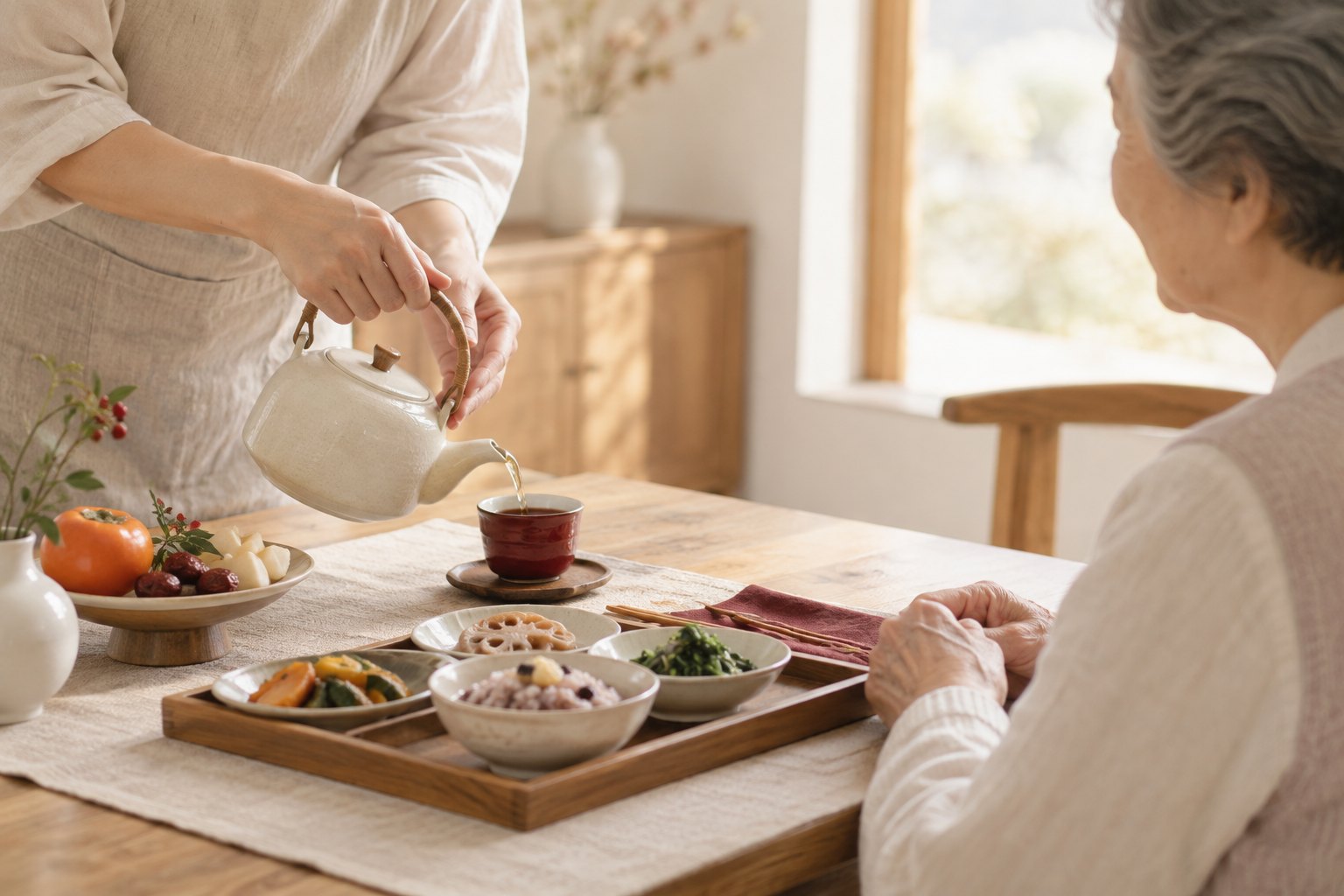
In the clinic, I often make this request to family members who bring in older parents. Even if they usually say they are doing fine, changes seen at the table or during a walk can be important health signals. When you meet your parents after some time apart, it is helpful to check both body and mind with warm questions, so it does not feel like nagging.
Appetite And Digestion Are The Basics Of Health In Older Age
As people age, stomach movement may slow, and saliva production or chewing strength may not be what it used to be. So it is important to check whether they are eating regularly these days, whether their appetite has decreased, and whether they have post-meal bloating, constipation, or diarrhea.
In Korean medicine, the idea of eumsik-yujeol, or eating an appropriate amount at regular times, is considered important. Holiday foods can easily become greasy and large in portion, so I recommend starting together with simple habits such as not lying down right after overeating and taking a light walk after meals.
Changes In Joints And Muscle Strength Show In The Way They Walk
If there is pain in the knees, hips, or lower back, activity may decrease, and as activity decreases, muscles and ligaments may weaken further. As you walk together somewhere nearby, naturally observe whether their stride has shortened, whether they lean to one side while walking, and whether they have fallen recently.
In yangsaeng, or health cultivation, we value johwa-dongjeong, meaning a balance of not overdoing activity and not resting for too long. However, on icy roads, snowy days, or very cold early mornings, it is safer to skip exercise in consideration of fall risk and cardiovascular burden.
Changes In Memory And Mood Are Also Health Signals
You can look for clues to cognitive changes by noticing whether you have recently been forgetting things often, repeatedly asking about appointments, or feeling confused on familiar routes. If you have trouble recalling the names of objects or your personality has suddenly become more sensitive, it is also important to check for low mood and sleep problems.
In Korean medicine, yeomdamheomu refers to a way of living that keeps the mind comfortable and calm. Staying close to nature, maintaining low-pressure hobbies, and creating a regular sleep rhythm can help support health in older age.
Consultation Is Recommended In These Cases
- When food intake noticeably decreases or weight loss continues
- When indigestion, abdominal pain, constipation, or diarrhea repeats
- When falls become frequent or joint pain makes you reluctant to go out
- When recent memory decline, personality changes, insomnia, or low mood is noticeable
- If sudden paralysis, slurred speech, decreased consciousness, or severe chest pain occurs, call 119 or go to the emergency room first without delay
Caring for an older adult’s health does not begin with complicated tests, but with daily meals, walking, and facial expressions. If you are taking medications, please do not stop them on your own. If discomfort keeps recurring, we recommend receiving care to review your current physical condition, constitution, and lifestyle habits together.