
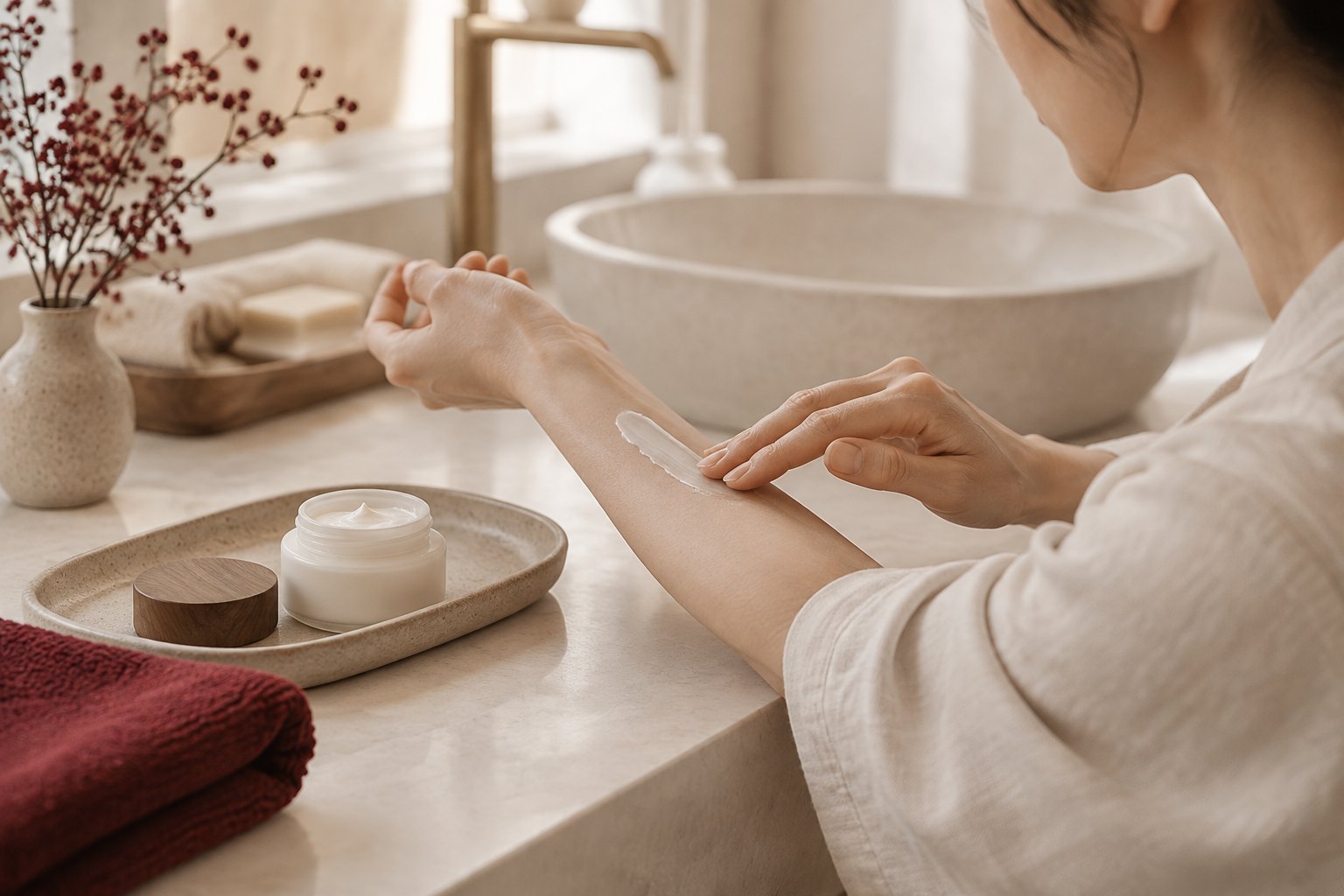
There are things I often hear in the exam room whenever the seasons change: “My face suddenly feels hot and stings,” “I have more flakes on my scalp,” or “The itching does not calm down even when I moisturize.” When temperature and humidity change rapidly, the protective layer on the skin surface can become unstable, and inflammatory skin conditions that were usually quiet can flare up again.
It is not just a dryness issue
Skin discomfort during seasonal changes does not occur only because of a lack of moisture. When heat sensations, sebum production, itching, flaking, and redness occur together while the skin barrier is weakened, we need to look at the patterns of seborrheic dermatitis, atopic dermatitis, or eczema. In particular, if redness and dandruff-like scaling recur in areas with more sebum production, such as the face, scalp, chest, and armpits, seborrheic dermatitis can be considered.
For chronic dermatitis, we also look at the body’s balance
In Korean medicine, inflammation that appears on the skin is not viewed only as a surface problem. We also check digestion, sleep, stress, the distribution of heat sensations, sweating, urination and bowel movements, and whether the hands and feet feel cold or warm, while assessing how circulation and immune responses inside the body have become disrupted. Even with the same “itching,” the approach differs depending on whether dryness is central, whether heat sensations are strong, or whether oozing is present.
Treatment addresses both skin barrier recovery and inflammation control
In Korean medicine treatment, we may use herbal medicine tailored to an individual’s constitution and symptom pattern, acupuncture and moxibustion treatment, and herbal medicine-based topical products depending on the situation. The goal is not only to ease stinging and itching on the skin surface, but also to care for the skin barrier and the body’s recovery environment so that recurring inflammation is less likely to fluctuate. However, if you are already applying or taking steroids, immunomodulators, antihistamines, or similar medications, do not stop them on your own and be sure to tell us during your visit.
What matters most in lifestyle management
- Reduce hot showers and harsh cleansing, and wash briefly with lukewarm water.
- After washing your face or showering, apply moisturizer before the skin is completely dry.
- Even if it itches, reduce scratching irritation and keep your nails short.
- Alcohol, overwork, and lack of sleep can increase facial heat and itching, so manage them as much as possible.
- If the indoor air is dry, manage humidity and heating temperature without overdoing it.
We recommend a consultation in these cases
If redness and flaking recur, or if oozing, scabbing, or severe itching disrupts your sleep, we recommend that you seek care. If pain spreads severely, fever occurs, pus develops, or inflammation around the eyes is present, prompt evaluation is also needed. Skin conditions can easily become chronic as they improve and worsen repeatedly, so it is important to identify the pattern early.
During seasonal changes, the skin may be one of the first places to show signs that the body has become sensitive. Along with calming visible lesions, care is needed to look calmly at why they keep recurring. I will look not only at skin discomfort, but also at your daily rhythm and constitution, and help you find a management direction that is less likely to fluctuate over time.