
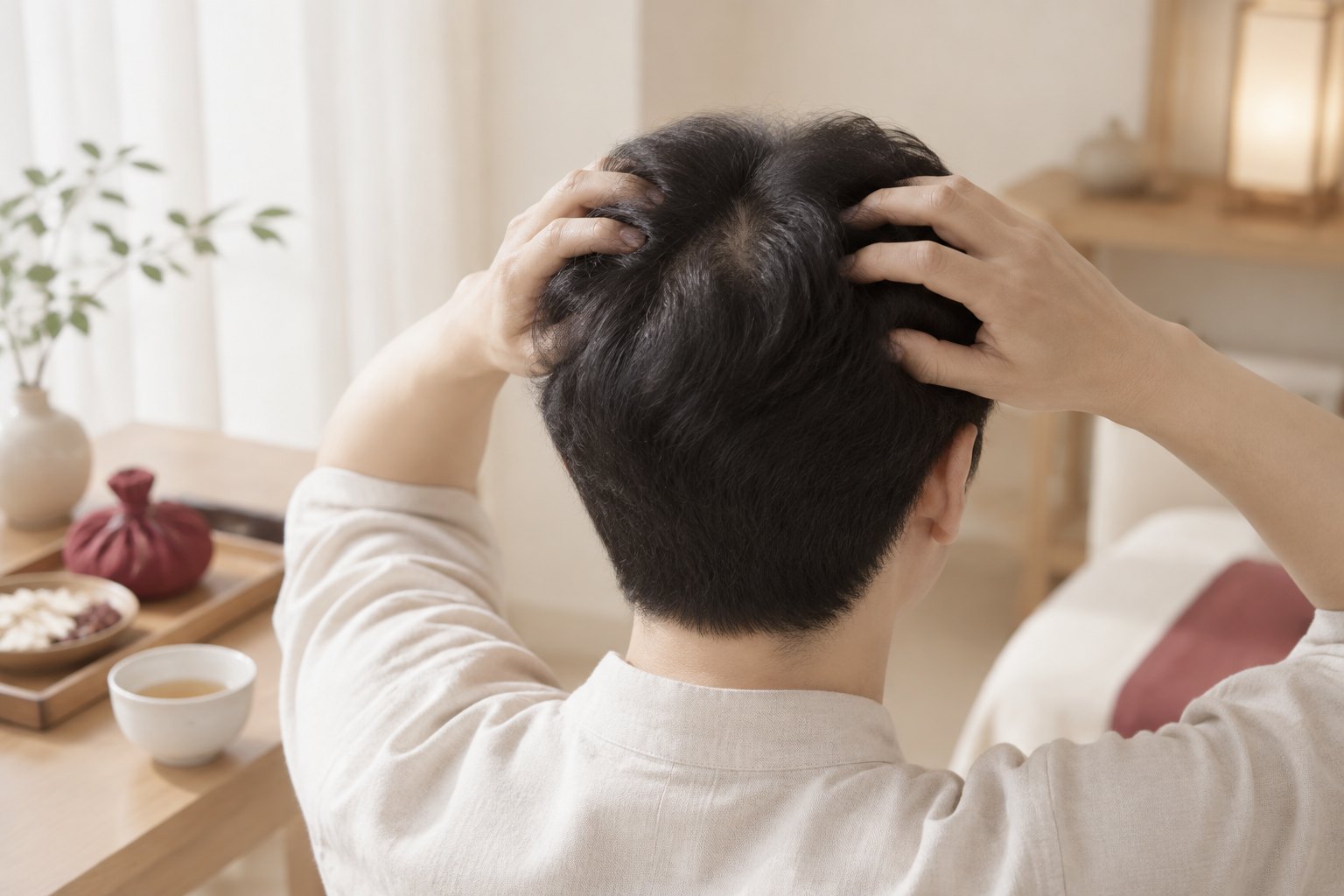
In the clinic, I often hear that patients keep scratching their scalp. At first, they may think it is just increased dandruff, but at some point the scalp becomes red, oozes, or forms scabs, which raises concern. If these symptoms repeatedly improve and worsen, seborrheic dermatitis of the scalp may need to be considered.
How are dandruff and scalp dermatitis different?
Seborrheic dermatitis is a skin condition in which inflammation repeatedly occurs in areas with heavy sebum secretion. It is easy to think it only appears on the face, but it can also occur on the scalp, behind the ears, at the crown of the head, and on the back of the head. On the scalp, itching, sticky or white flakes, a red rash, small bumpy lesions, oozing, and scabs may appear together.
If you keep scratching because it itches, the skin barrier can become weaker and wounds can form more easily. If bleeding or oozing repeatedly occurs in areas irritated by the fingernails, it becomes necessary to distinguish this from folliculitis, eczema, or acne-like lesions.
It may not be only a scalp problem
Seborrheic dermatitis of the scalp can be difficult to resolve with shampoo choice alone. When the body’s balance is disrupted by stress, lack of sleep, irregular meals, irritating foods, alcohol, and similar factors, scalp inflammation may not settle down easily.
In Korean medicine, we look at lesions on the surface of the skin together with patterns of heat rising upward, digestion, bowel movements, sleep, fatigue level, and constitutional characteristics. People who easily feel heat rising to the upper body and scalp and have stagnant circulation are more likely to have recurring itching and redness.
What we check in Korean medicine care
I check how red the scalp is, the pattern of scaling, whether there is oozing, and how long the symptoms have continued, and I also look at the skin around the face and ears. When needed, I combine methods such as herbal medicine, acupuncture, and moxibustion, taking constitution and overall body condition into account, with the aim of helping balance skin immunity and heat circulation.
If you are already using dermatology medications or topical products, it is best not to stop them on your own. A process of reviewing your current treatment response and lifestyle factors together is needed to set a management direction that is not excessive.
Lifestyle Management is also part of treatment
- Do not scratch the scalp with your fingernails; when it itches, briefly soothe it with a cold towel.
- Rinse shampoo thoroughly so it does not remain on the scalp, and do not leave your hair wet for a long time.
- Observe whether greasy and spicy foods, heavy drinking, or late-night snacks worsen your symptoms.
- If lack of sleep and overwork keep recurring, scalp heat and itching may worsen, so make time for recovery.
- If symptoms worsen after hair dyeing, perms, or strong hair products, set aside a period to reduce irritation.
We recommend a consultation in these cases
If itching disrupts your sleep, if oozing, scabs, or pain recur, or if changes in hair volume such as hair loss accompany the symptoms, we recommend that you receive care. Scalp conditions may look similar on the surface, but their causes and management can differ. The longer symptoms have recurred, the more important it is to calmly assess not only the scalp but also the condition of the body.