
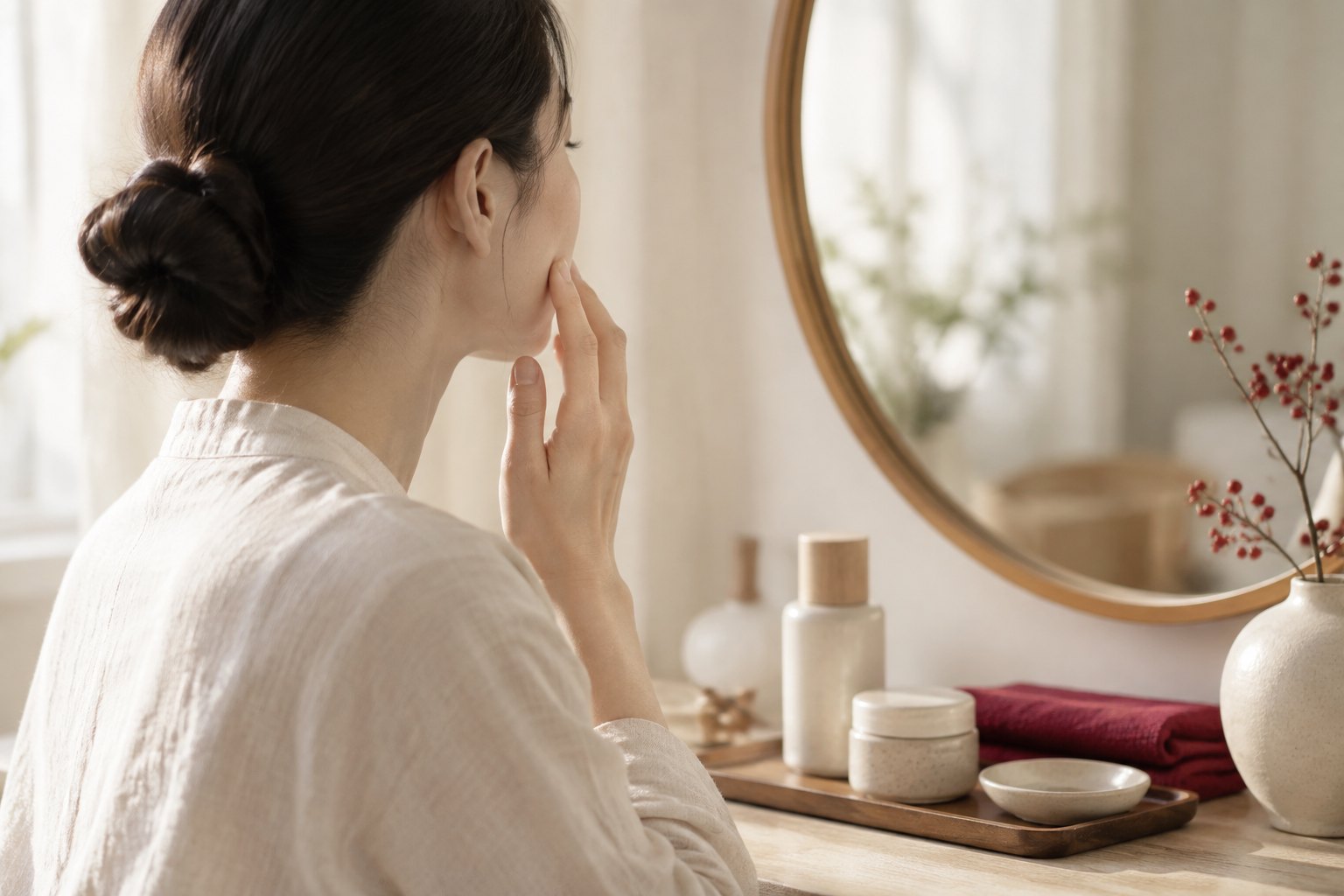
In the consultation room, I often hear that the face flushes easily and the redness does not settle well. Temporary redness can happen to anyone when moving from a cold place into a warm indoor space, when feeling tense, or after eating spicy food. However, if redness lingers and stinging, burning, small bumps, or pustules keep recurring, it is necessary to consider the possibility of rosacea rather than simple flushing.
Rosacea Commonly Appears In The Central Face
Rosacea is a chronic inflammatory skin condition in which erythema and heat sensations recur in the central face, such as the cheeks, nose, and around the mouth. The skin becomes sensitive and easily reddens, and over time symptoms such as papules, pustules, swelling, and oozing may occur. Not only heat stimulation in summer, but also winter dryness, indoor-outdoor temperature differences, and irritation from cosmetics can disrupt the skin barrier.
If It Repeats For A Long Time, Skin Changes May Deepen
If it is temporary flushing that settles within a few days, you can reduce lifestyle triggers and observe the course. However, if redness continues for several months or repeatedly improves and worsens, capillary dilation and inflammatory reactions may become more established together. Scratching or squeezing, secondary infection, and using irritating topical products can cause symptoms to spread, so caution is needed.
In Korean Medicine, We Do Not Look Only At The Skin
When I see rosacea, I check not only the degree of redness on the skin surface, but also heat sensations, digestion, sleep, stress responses, menstrual cycle, and drinking habits. From a Korean medicine perspective, we classify patterns such as a type with prominent red erythema and a type with recurring papules and pustules, and approach treatment according to constitution and symptoms. Herbal medicine, acupuncture, moxibustion, and other treatments are planned in a direction that may help reduce excessive inflammatory responses and support circulation and skin recovery.
The Key To Lifestyle Management Is Reducing Irritation
- Avoid hot saunas, strong sunlight, and sudden temperature changes as much as possible.
- Wash your face briefly with lukewarm water, and stop using scrubs or peeling products when symptoms are severe.
- Use cosmetics with high alcohol content or strong fragrances after checking whether they irritate your skin.
- Keep a record of whether alcohol, spicy foods, or very hot foods worsen flushing.
- If you are using steroids or immunosuppressants, do not stop them on your own; decide how to adjust them through medical care.
We Recommend A Consultation In These Cases
- Facial redness continues for more than 3 months.
- Burning, stinging, or itching affects daily life.
- Papules or pustules recur, or oozing occurs.
- It improves briefly only when applying an existing ointment and then worsens again.
- Eye redness, a foreign-body sensation, or eyelid inflammation occurs together.
Rosacea is a sign that the skin is sensitive, and it often appears when the body’s inflammatory response overlaps with lifestyle triggers. Rather than adding more products to cover a red face, the first step is to calmly identify what makes the skin flush. If recurring flushing is concerning, we recommend assessing both your skin condition and constitution to set a management direction that fits you.