
In the clinic, I often hear concerns such as, “The tests don’t show anything major, but my child keeps saying their stomach hurts.” Children may express fatigue, tension, and eating-related issues through abdominal pain. A stomachache that passes once or twice may calm down with rest, but if it recurs, it is good to look at the child’s daily rhythm and gastrointestinal condition together.
What does functional abdominal pain look like?
Functional abdominal pain refers to a condition in which abdominal pain recurs even when no clear structural abnormality is found. Children mainly feel discomfort around the upper abdomen or navel, and when they are not in pain, they may appear to play and go about daily life relatively well. They often point to a similar area rather than pain spreading widely, but it is difficult to determine the condition based on the pattern alone.
It may occur more often in children with weak gastrointestinal function
Children who usually have a poor appetite and do not gain weight well, have a pale or yellowish complexion, or easily have loose stools may have more sensitive gastrointestinal function. When late bedtimes, irregular meals, greasy and salty foods, and sweet snacks are added, abdominal pain and indigestion become more frequent. Tension from exams or relationships also affects intestinal movement.
Care you can try at home first
- Keep the abdomen from getting cold, and gently rub around the navel with a warm hand.
- When diarrhea is present, have the child drink lukewarm water in small amounts often to help prevent dehydration.
- Right after the pain subsides, do not immediately give irritating foods. Start with less burdensome meals such as porridge, soft rice, and cooked vegetables.
- Even if the child eats only a small amount of rice, do not replace meals with fried foods, cold drinks, or sweet snacks.
- As a family, help build the habit of eating slowly at set times and cutting back on late-night snacks before bed.
In Korean medicine, we look at causes by category
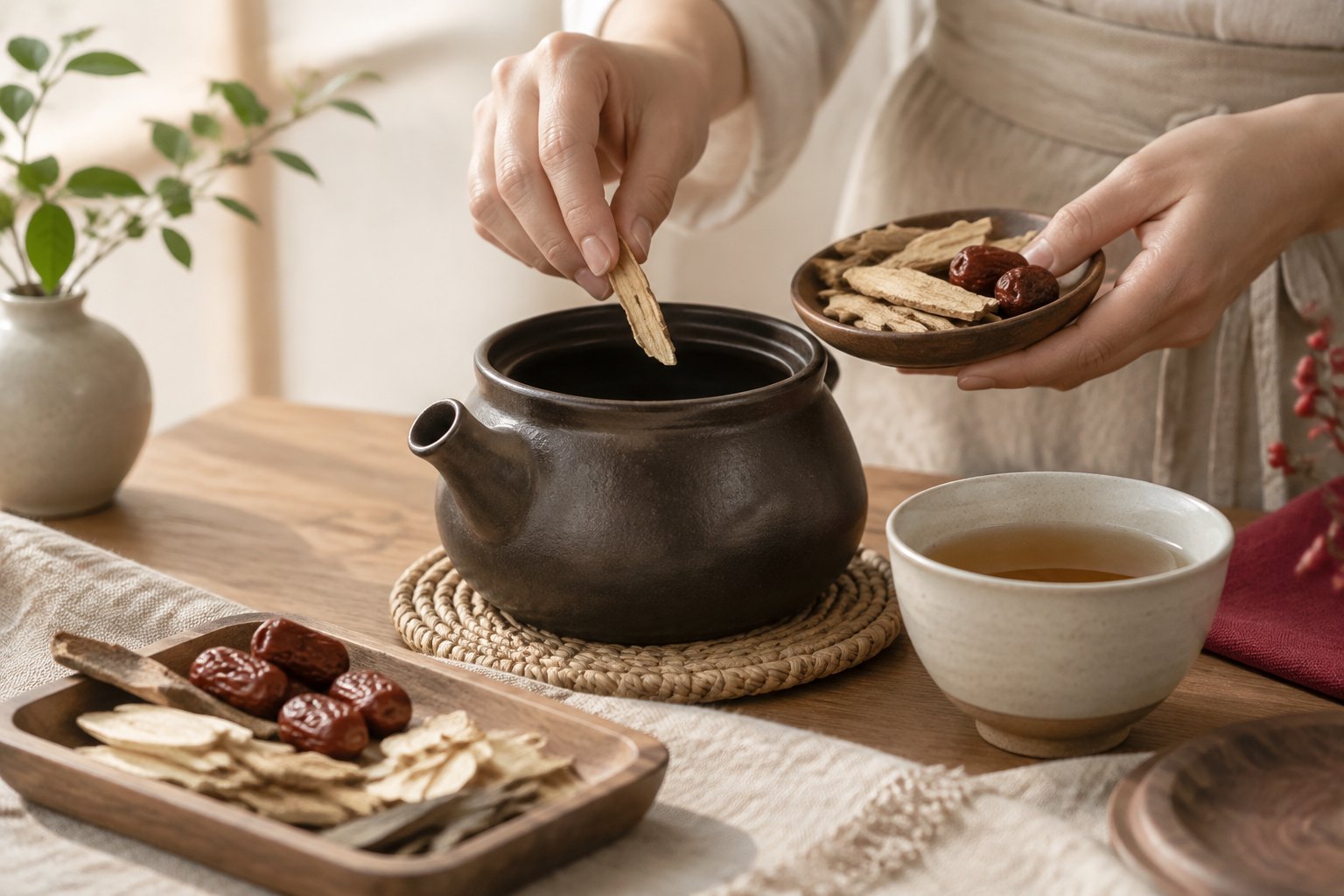
We do not approach every child’s abdominal pain with the same prescription. The direction of care differs depending on whether the child’s stomach qi is weak, food is not moving down well and causes fullness, or tension and stress are irritating the intestines. In Korean medicine care, we check constitution and the pattern of symptoms, then use herbal medicine, acupuncture, moxibustion, acupressure, and other methods as needed to help restore gastrointestinal function and ease tension.
We recommend a medical visit in these cases
- When weight decreases over a short period or the child becomes noticeably listless
- When high fever, repeated vomiting, severe diarrhea, or bloody stool occurs
- When the child often wakes at night because of pain, or the pain gradually worsens
- When pain is clearly in a specific area, such as the lower right abdomen, and becomes worse with movement
- When dehydration is suspected, such as dry mouth and decreased urination
In urgent situations such as decreased consciousness, severe dehydration, or extreme abdominal pain, you should first seek help from 119 or an emergency room. Repeated abdominal pain can affect a child’s eating, sleep, concentration, and growth pattern. Rather than only worrying sensitively about the signals your child is sending, we recommend organizing daily habits and, when needed, receiving care to check the causes step by step.