
Patients who come to the clinic for eczema are usually exhausted from long-lasting itching. I often hear that it began as a small red spot or dryness, but after scratching, it started to ooze, scab over, and spread. Eczema is not contagious, but if it repeats, the skin barrier can weaken and daily discomfort can increase, so it is important to address the pattern early.
Eczema does not appear in just one form
Eczema is a broad term for a condition in which an inflammatory reaction occurs in the skin, causing itching and redness, and sometimes swelling, stinging, and oozing. It may remain in a specific area such as the hands, arms, or legs, or appear to spread to multiple areas of the body. If it continues for a long time, lichenification, pigmentation, and color changes, in which the skin becomes thick and rough, may remain.
Oozing and scabs are signs of current inflammation
When the skin is wet and oozing, inflammation is often relatively active. At this time, scrubbing the skin harshly or using strong cleansers can further damage the skin barrier. In contrast, long-standing eczema often shows prominent dryness, white flaking, and thickened skin, so the management direction should differ even for the same eczema.
We look at causes both outside the skin and inside the body
Eczema often develops from a combination of factors rather than a single cause. External irritants such as water, detergents, metals, cosmetics, sweat, and humid environments can play a role, and stress, lack of sleep, eating habits, immune balance, and constitutional sensitivity should also be considered. That is why we look beyond the appearance of the skin lesions and check when they worsen and in what living environment they tend to recur.
Korean medicine treatment looks at the symptom stage and constitution
When I see eczema, I first look at the degree of oozing, heat sensation, itching, dryness, scaling, and pigmentation. I also check digestion, bowel movements, sleep, fatigue, stress responses, and whether the hands and feet feel cold or warm, then combine herbal medicine, acupuncture, pharmacopuncture, and topical care as needed. The goal is not only to suppress the inflammation visible on the skin, but also to organize the body’s conditions for recovery so recurrence may be reduced.
We recommend a consultation in these cases
- Itching often wakes you up or makes it difficult to concentrate in daily life.
- Oozing, scabbing, and cracking keep recurring, and the affected area is spreading.
- Scratched areas become swollen, feel hotter, or are accompanied by pain.
- Even with ointment, it improves briefly and then recurs in the same area.
- Skin pigmentation or thickening is becoming noticeable.
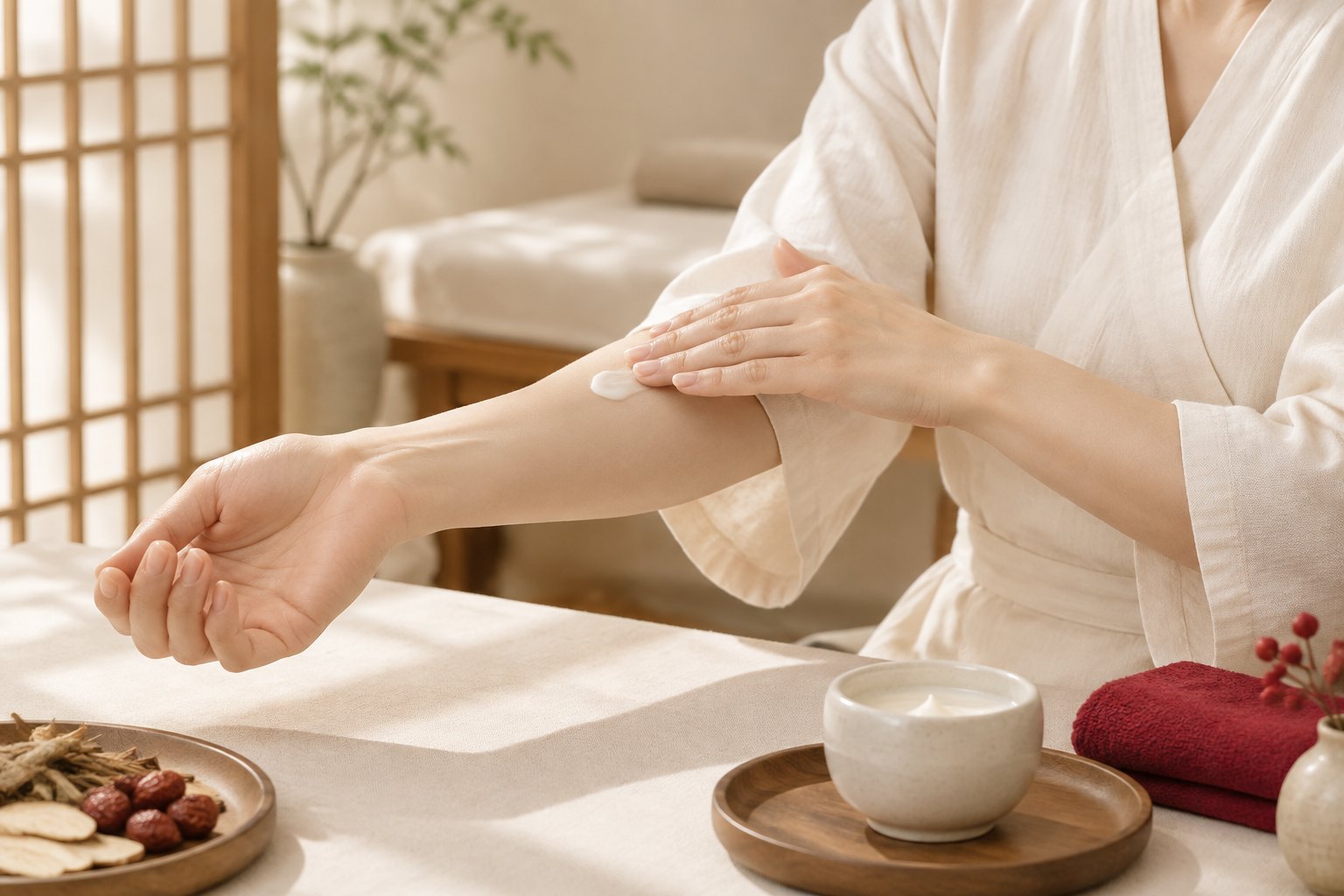
In daily life, it is helpful to wash briefly with lukewarm water and reduce the use of strongly scented cleansers and frequent hand sanitizers. Rather than applying moisturizer only when you itch, apply it right after washing and reapply whenever your skin feels dry during the day. If you are already using a prescribed medication or ointment, do not stop it on your own; we recommend being seen to determine whether adjustments are needed for your current condition.
Eczema appears to be a skin problem on the surface, but treatment and management tend to be more stable when they also address daily rhythm and the body’s balance. The approach needed differs for periods of oozing, periods when the skin becomes dry and thickened, and periods of repeated recurrence. Rather than enduring symptoms for a long time, please take a calm look at the signals your skin is sending now.