
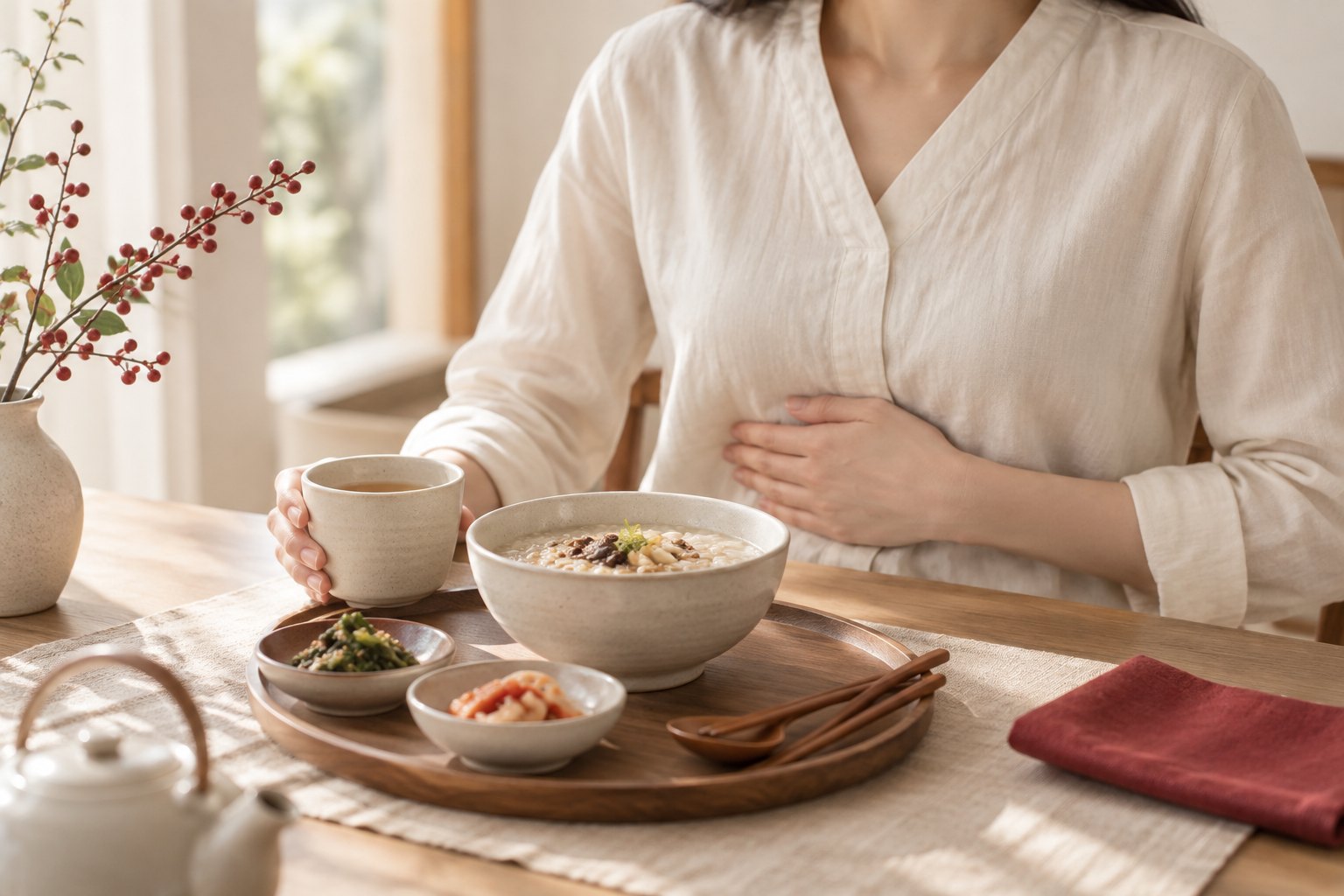
In the clinic, I often hear patients say, “My endoscopy was fine, so why is my digestion still this poor?” If you feel full soon after eating, feel pressure in the upper abdomen, and have repeated belching or nausea, eating itself can become burdensome. In these cases, rather than simply saying the “stomach is sensitive,” I first take time to look at how the stomach’s ability to receive food and move it downward has become disrupted.
Discomfort Can Occur Even When Tests Are Normal
Functional dyspepsia refers to a condition in which bloating, early satiety, and pain or tightness in the upper abdomen persist even without a clear structural abnormality. It is often not just an issue of stomach acid, but a combination of reduced stomach motility, heightened stomach sensitivity, stress responses, and eating habits. This is why many people feel better briefly after taking digestive medicine, only for the discomfort to return.
Lifestyle Factors That Weaken The Stomach
Some people are born with weaker digestive strength, but in the clinic, I more often see cases where the stomach’s rhythm has become disrupted over time. Late-night meals, eating quickly, excessive alcohol intake, greasy foods, a sedentary lifestyle, and lack of sleep can interfere with the stomach’s natural cycle of rest and movement. Some people first feel blocked or stuck in the stomach when tension and worry continue.
What Do We Look For In Korean Medicine?
In Korean medicine, even the same indigestion is assessed by the body’s condition. Cases may differ, such as when qi and blood are insufficient and the stomach lacks the strength to move, when dameum is stagnant and the stomach feels heavy and tight, when body fluids that keep the stomach moist are insufficient, or when blood stasis makes circulation less smooth. We review the medical history, abdominal findings, pulse findings, and eating, sleep, and bowel habits together to decide the direction of herbal medicine, acupuncture, and moxibustion treatment.
Lifestyle Management Is Part Of Treatment
- Eat at regular times as much as possible, and chew each bite slowly.
- Do not lie down right after meals; support stomach motility with light walking.
- On days when your stomach feels uncomfortable, avoid greasy foods, overeating, and alcohol.
- If caffeine and carbonated drinks increase belching or heartburn, reduce the amount.
- If tension affects your digestion, also manage abdominal breathing, short walks, and sleep time.
When We Recommend A Consultation
If indigestion repeats for several weeks or longer, or if you are eating less, losing weight, and having difficulty with daily life, we recommend that you seek care. If you have black stools, vomiting with blood, difficulty swallowing, severe abdominal pain, unexplained anemia, or rapid weight loss, medical evaluation, including stomach testing, is needed first. If you are already taking stomach medication or other medications, please do not stop them on your own; discuss them along with your current condition.
Indigestion is called by one name, but the path that makes the stomach uncomfortable differs from person to person. Looking at stomach function, constitution, and daily rhythm together can help find a direction in which meals become gradually more comfortable. Rather than enduring repeated bloating, I hope you will take it as a signal from your body and have it checked.