
If your adult atopic dermatitis, which you have had since childhood, seems to be improving but then spreads again, and worsens after becoming an adult, it can be very exhausting. Especially if the itchiness prevents you from sleeping and the ointment doesn't soothe it as before, you may worry, "Will this condition continue?" Atopic dermatitis is a chronic skin inflammation that repeatedly improves and worsens, so it's important to check the skin condition, lifestyle factors, and body responses together to make a plan.
Reasons why adult atopic symptoms persist into adulthood
Atopic dermatitis is characterized by severe itching, red and bumpy rashes, and weeping wounds, and it is a chronic skin condition. It commonly appears in areas where the limbs fold, the neck, and the face, and tends to react sensitively to external stimuli or allergens. It is easy to think that it will naturally decrease as you become an adult, but in reality, some people experience repeated improvement and worsening even after adulthood.
The cause cannot be definitively determined as one factor. Genetic influences, living environment, food, and stress factors can work together, and the precise cause has not yet been identified. Moreover, if other allergic conditions like rhinitis or asthma coexist, or if there is a bacterial infection, the course may vary.
The vicious cycle of scratching, wounding, and spreading again
When itchiness is severe, one might scratch unconsciously, and as wounds and weeping develop at the scratched area, the range can widen. If the scabbed area is scratched again, the skin barrier may become more sensitive, leading to a slower recovery process. Those who have used steroid ointments for a long time may also feel that their skin tissue has weakened or that the response to the medication isn't as it used to be.
However, it's important to avoid abruptly discontinuing any ointments or medications being used. Whether the current prescription needs adjustment should be discussed with the medical team, and at the Korean medicine clinic, the process of gradually reducing steroid dependency is monitored according to the individual's condition. Detailed directions for treatment can also be found in the Hoechundang Kyunghee Ryu Korean Medicine Clinic's Adult Atopic Dermatitis guide.
We consider both the skin and the body's responses
Generally, atopic dermatitis is understood as a chronic inflammatory condition visible on the skin. The symptom pattern can vary depending on skin condition, irritants, the presence of other allergic conditions, and secondary infections. Therefore, it is important to not only look at the visible rash but also to identify what triggers the itchiness and inflammation.
In Korean medicine, chronic skin conditions are examined along with external factors affecting the skin. Treatment plans are made considering organ imbalance, immune decline, problems in the liver, stomach, and intestines, blood circulation, and the impact of waste products in the body. This does not mean pinpointing one specific cause, but rather looking at lifestyle factors and the overall state of the body together.
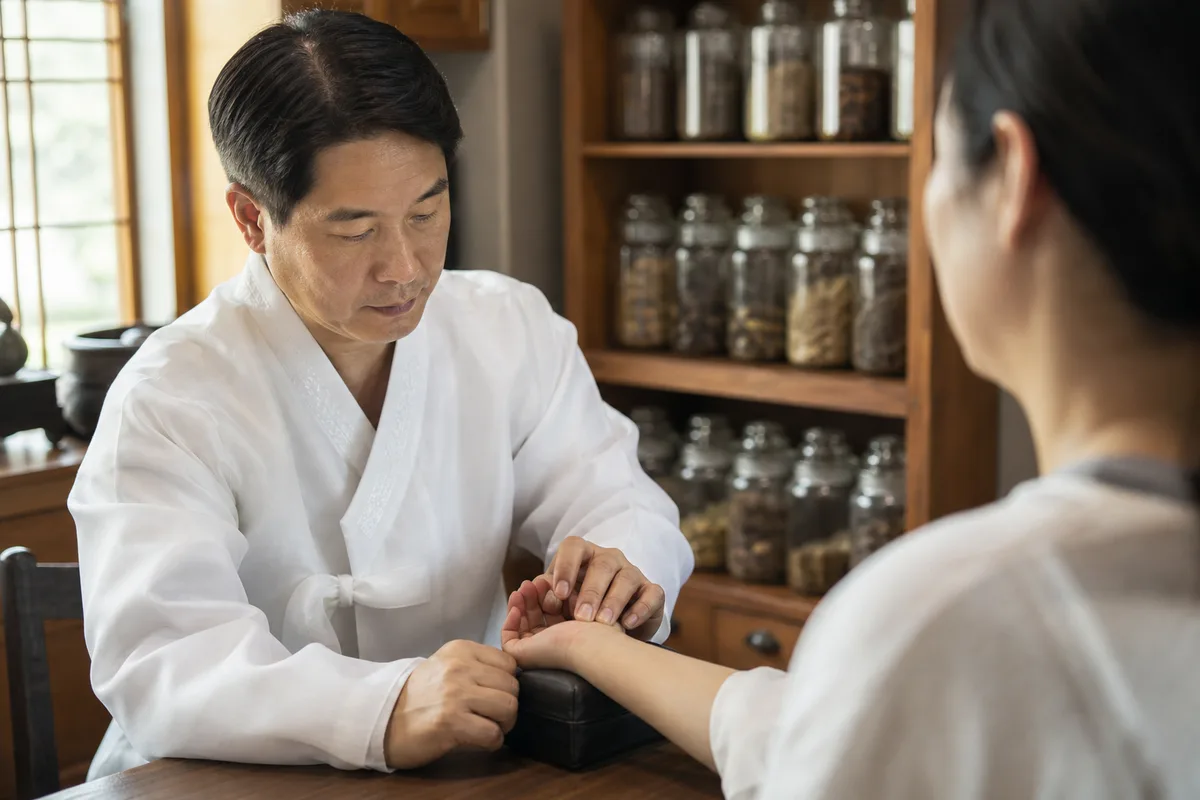
During consultation, both skin condition and body balance are checked
In the consultation room, we first check when the condition started, which area is most severe, whether there are weeping, scabs, or wounds, and whether symptoms fluctuate with food, stress, or environmental changes. We also review the use of steroid ointments, medications being taken, and the history of herbal medicine or topical preparations. If you have blood test or allergy test results, bringing them during your visit can help us better understand your current condition.
At Hoechundang Kyunghee Ryu Korean Medicine Clinic, we view the body's condition from various perspectives through the Iris Genetic Constitution Test, Ryodoraku Meridian Function Test, HRV Autonomic Nervous System Test, and the Cellular Health Immunity Test using InBody S10. The iris test is a non-invasive test that examines genetic strengths and weaknesses, constitutional imbalance, emotional response, and autonomic nervous system balance. Ryodoraku assesses meridian function and self-healing power, HRV checks the balance of sympathetic and parasympathetic nerves, and InBody S10 is used to examine cellular function, immune and nutritional status, circulation, and body fluid levels.
At home, start by managing aggravating factors
Adult atopic dermatitis often fluctuates with lifestyle changes. Since food, living environment, stress, and sleep rhythm can affect skin reactions, it is beneficial to combine routine management with consultation. Keeping a record of what aggravates your condition can help narrow down the cause during consultations.
- Keep nails short to prevent enlarging wounds from scratching itchy areas.
- Do not forcibly remove scabs or weeping areas, and follow the prescribed topical application instructions.
- If itchiness worsens after eating certain foods, note the type and timing.
- Observe if symptoms worsen with increased stress and tension, and maintain a consistent sleep schedule.
- If symptoms change after moving, seasonal changes, or indoor environment changes, inform us during your visit.
Korean medicine clinic consultations are tailored and conducted step-by-step
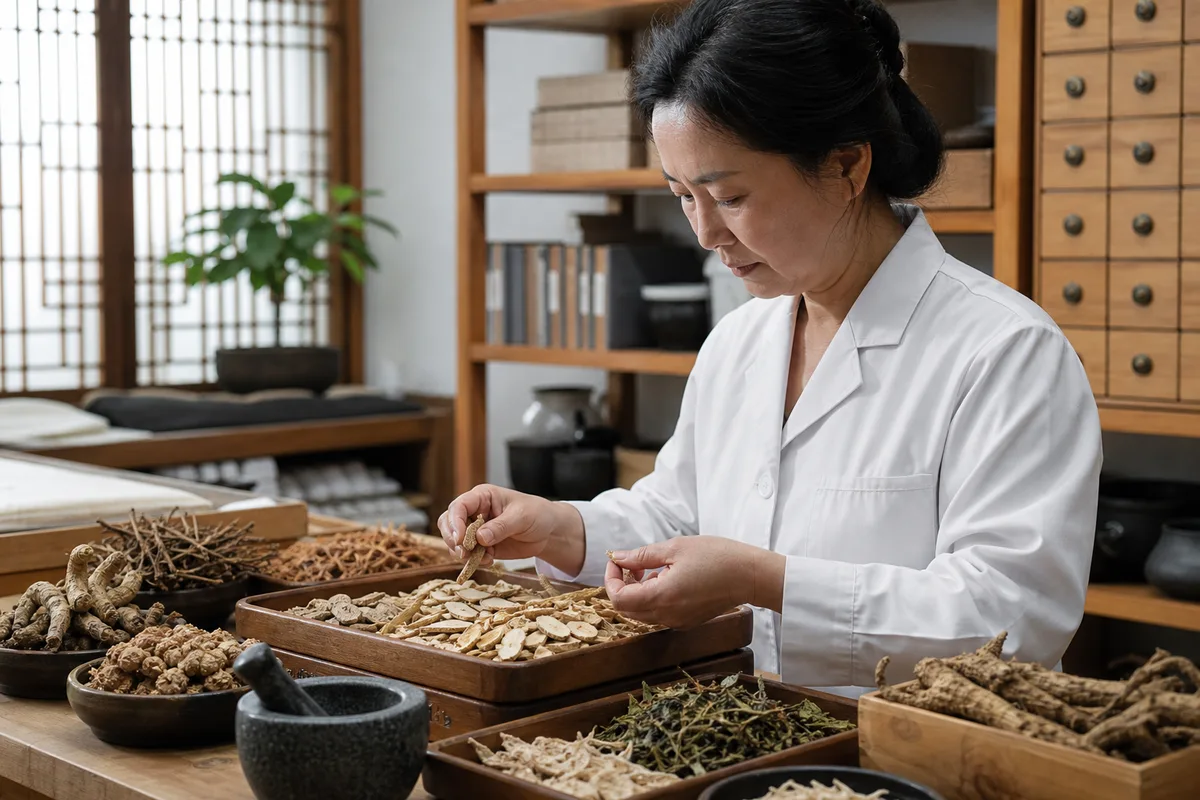
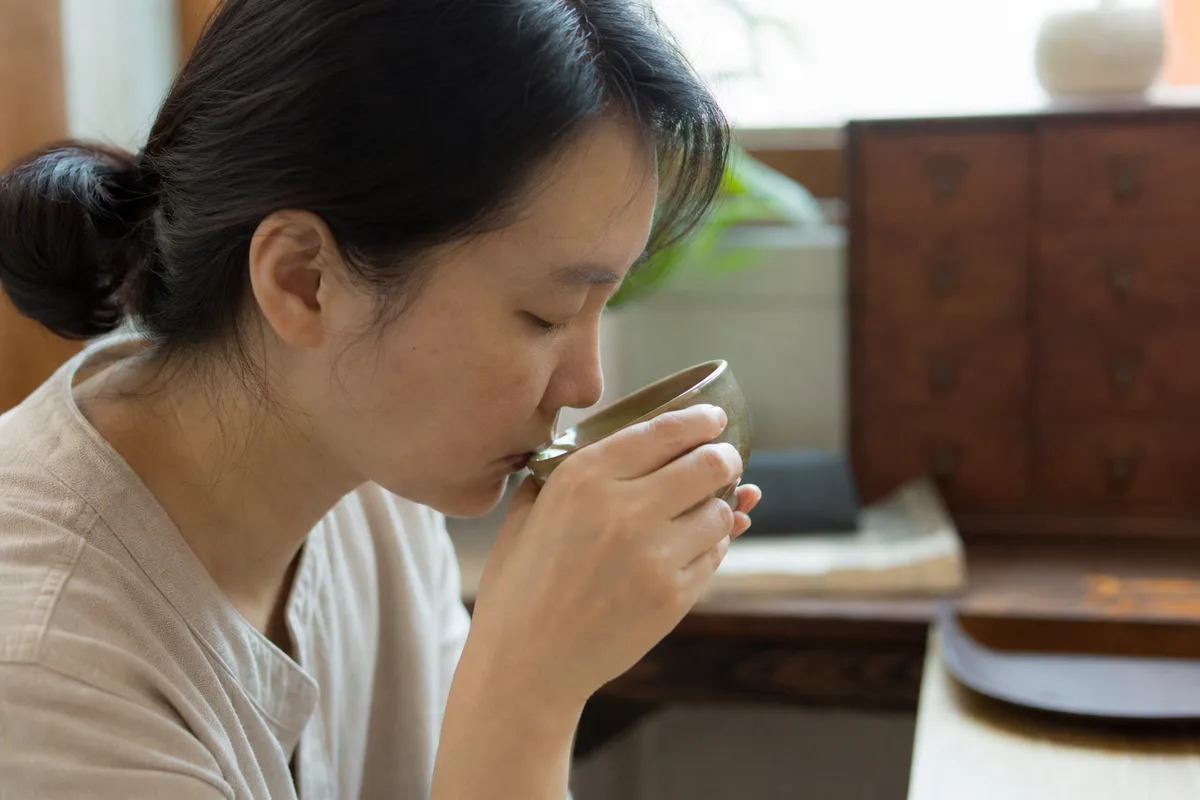
In clinic consultations, we prescribe One-on-One Personalized Herbal Medicine based on constitution, symptom severity, duration, and lifestyle. Skin detox herbal medicine may be used, considering waste products affecting the skin and circulation status, and can also be used in the process of maintaining an improved state after treatment. The effect or course may vary depending on the individual's skin condition, aggravating factors, and existing treatment history.
If necessary, Acupuncture · Moxibustion · Cupping · Pharmacopuncture, phototherapy, and Korean Herbal Topical Preparations may be considered together. Acupuncture and moxibustion are used to aid blood circulation and skin recovery processes, cupping is used to observe blood stasis, and pharmacopuncture, which cools heat and detoxifies, is applied considering the heat and inflammation at the lesion site. For topical preparations, options like Jaungo, Jaungo Cream, Ilhwanggo, and Cheongyeolgo can be selected according to skin condition, and prescriptions vary based on the type of itchiness, weeping, or inflammation.
In these cases, hospital or emergency room care is needed first
Even if you have had atopic dermatitis for a long time, sudden changes in symptoms should not be dismissed as just a skin issue. Particularly if infection is suspected or systemic symptoms appear, hospital care or emergency room evaluation may take precedence over Korean medicine clinic care. If you are taking any medications or have pre-existing conditions, it is also advisable to convey that information.
- When high fever, chills, or severe flu-like symptoms accompany it
- When redness and swelling spread rapidly and pain becomes severe
- When pus, severe weeping, foul odor occurs, and wounds expand rapidly
- When lips or face swell, and breathing becomes difficult or uncomfortable
- When dizziness, loss of consciousness, or severe general weakness is apparent
Frequently Asked Questions
Should I stop using steroid ointments immediately?
It is better to consult on gradually adjusting after checking the current skin condition and usage period rather than abruptly stopping on your own. In the Korean medicine clinic, we monitor the process of reducing steroid dependency and consider treatments that help skin recovery.
Are childhood atopic dermatitis and adult atopic dermatitis different?
While atopic dermatitis that begins in childhood may improve as one becomes an adult, some experience it as a chronic skin condition that repeatedly improves and worsens. In some cases, it can occur alongside other allergic conditions like rhinitis or asthma, so accompanying symptoms should also be considered.
Does the treatment take a long time?
If exposed to steroids for a long time, or if weeping wounds and secondary infections are repeated, the recovery process may require more time. However, the duration varies based on the individual's skin condition, lifestyle factors, and body responses, so it's safest to plan after examination and consultation.
Is it enough to apply topical preparations at home?
Topical preparations can help manage itchiness and skin conditions, but if symptoms are recurring, it's advisable to also check food, stress, environment, and body balance. Use prescribed ointments or creams as directed, and inform us of any changes in symptoms during consultations.
Not all long-standing adult atopic dermatitis can be managed in the same way. Determining the degree of itchiness, the state of weeping and wounds, steroid use history, and lifestyle aggravating factors is essential to plan according to the current body condition. Hoechundang Kyunghee Ryu Korean Medicine Clinic examines both skin and systemic conditions through tests and consultations in its Adult Atopic Dermatitis consultations, so rather than enduring excessively, calmly check the current state.
※ Note This article aims to provide general health and medical information, and applicability and results may vary depending on individual health conditions. A precise diagnosis and decision on examination or procedures should be made after consulting with the medical team.