
Diet & BeautySkin Care & Aesthetics
FACIAL ASYMMETRY & PALSY
Facial Asymmetry · Facial Palsy
Does my face look uneven from side to side in photos?
This treatment looks for and addresses the causes of asymmetry, from balance in the TMJ and spine to sequelae of facial palsy.
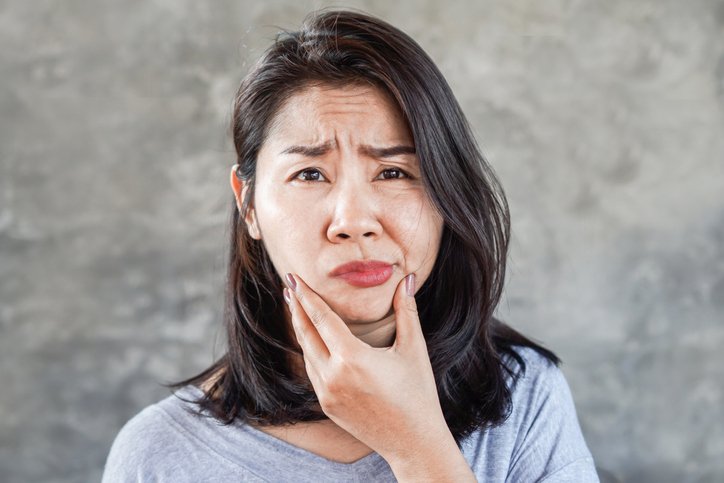
of Hoechundang care
- POINT 01
Cause-focused correction that also looks at TMJ · Spine · Pelvis alignment (Jeongan Facial Acupuncture · maeseon · Chuna Manual Therapy)
- POINT 02
Customized treatment for sequelae of facial palsy, such as facial stiffness, synkinesis, and trembling
- POINT 03
Care by a director trained at the Facial Palsy Center of Gangdong Kyung Hee University Korean Medicine Hospital
01RECOMMENDED FOR
Recommended For
0/ 6
Tap the items that apply to you.
02PROGRAM GOALS
Why does facial asymmetry occur?
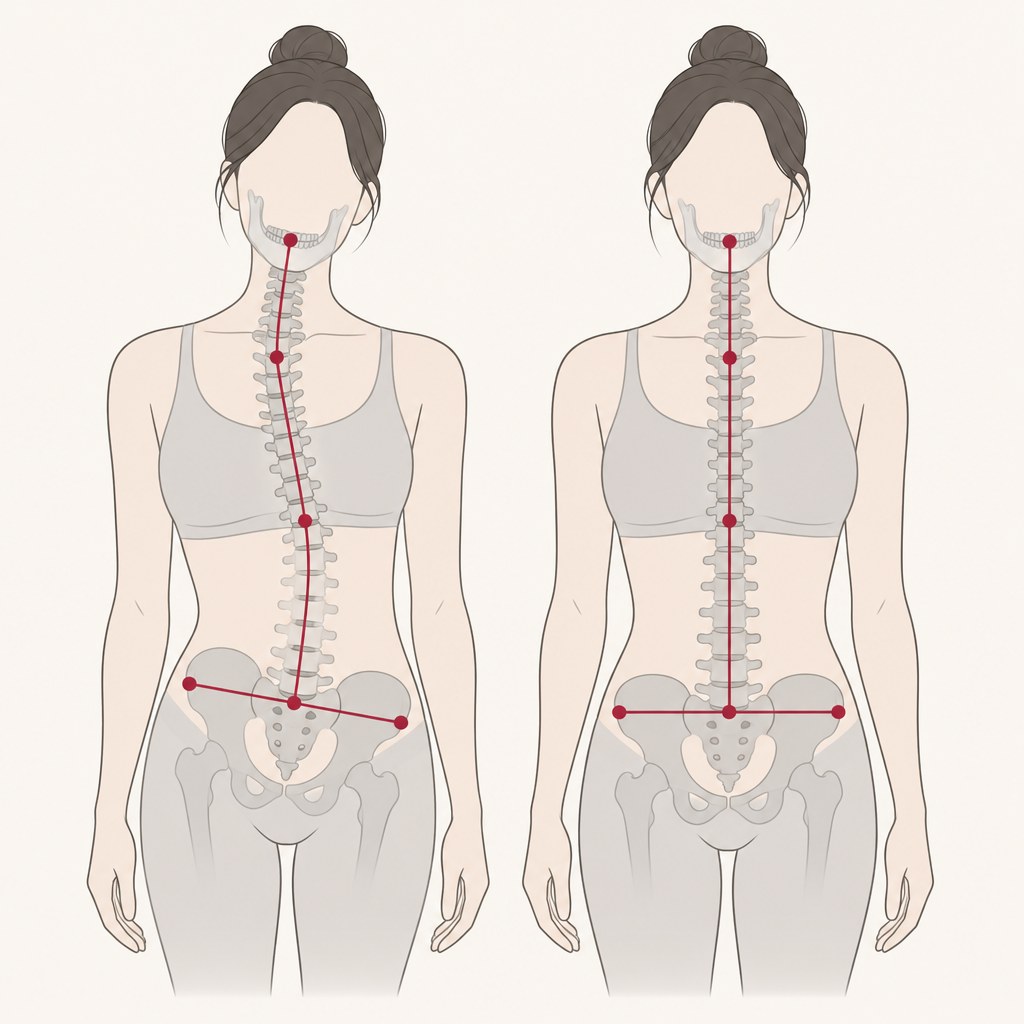
Major causes of facial asymmetry include misalignment of the TMJ · Spine · Pelvis due to poor posture. Facial asymmetry is one of the symptoms that can appear when the spine, the body’s central axis, is out of balance. Lingering sequelae after facial palsy can also cause asymmetry.
- 01
TMJ · Spine · Pelvis
When alignment is off from the spine and pelvis to the TMJ, facial asymmetry can develop. Misalignment of the neck bones (cervical spine) and TMJ can interfere with facial blood circulation and increase tension in the neck and head muscles.
- 02
Sequelae of Facial Palsy
In general, 60~70% of facial palsy cases recover within 1 year. However, it has been reported that about 20~30% of severe cases may have sequelae beginning 3~6 months later.
03WHY TREAT EARLY
Sequelae of facial palsy can appear as these symptoms
Even when sequelae are present, many people leave them untreated because they do not know what treatment to receive. Even if it takes time, consistent treatment may help shorten recovery time and reduce sequelae.
- 01
Crocodile Tears Syndrome
Tears flow when eating. This occurs because the nerves going to the salivary glands and tear glands become crossed and are stimulated together.
- 02
Synkinesis
During recovery, nerves reconnect incorrectly, causing the eye to close when chewing food or the mouth to move when blinking.
- 03
Facial Contracture
The facial muscles become stiff, tight, and uncomfortable. Left-right asymmetry and differences in the depth of the nasolabial folds may be seen.
- 04
Facial Spasm · Twitching
As the nerves recover, overexcitability can occur, causing the facial muscles to tremble.
04PROGRAM
Treatment Methods
Recommended combined treatment — facial asymmetry: Jeongan Facial Acupuncture · maeseon · Chuna Manual Therapy for skeletal alignment / sequelae of facial palsy: acupuncture · Jeongan Facial Acupuncture · maeseon
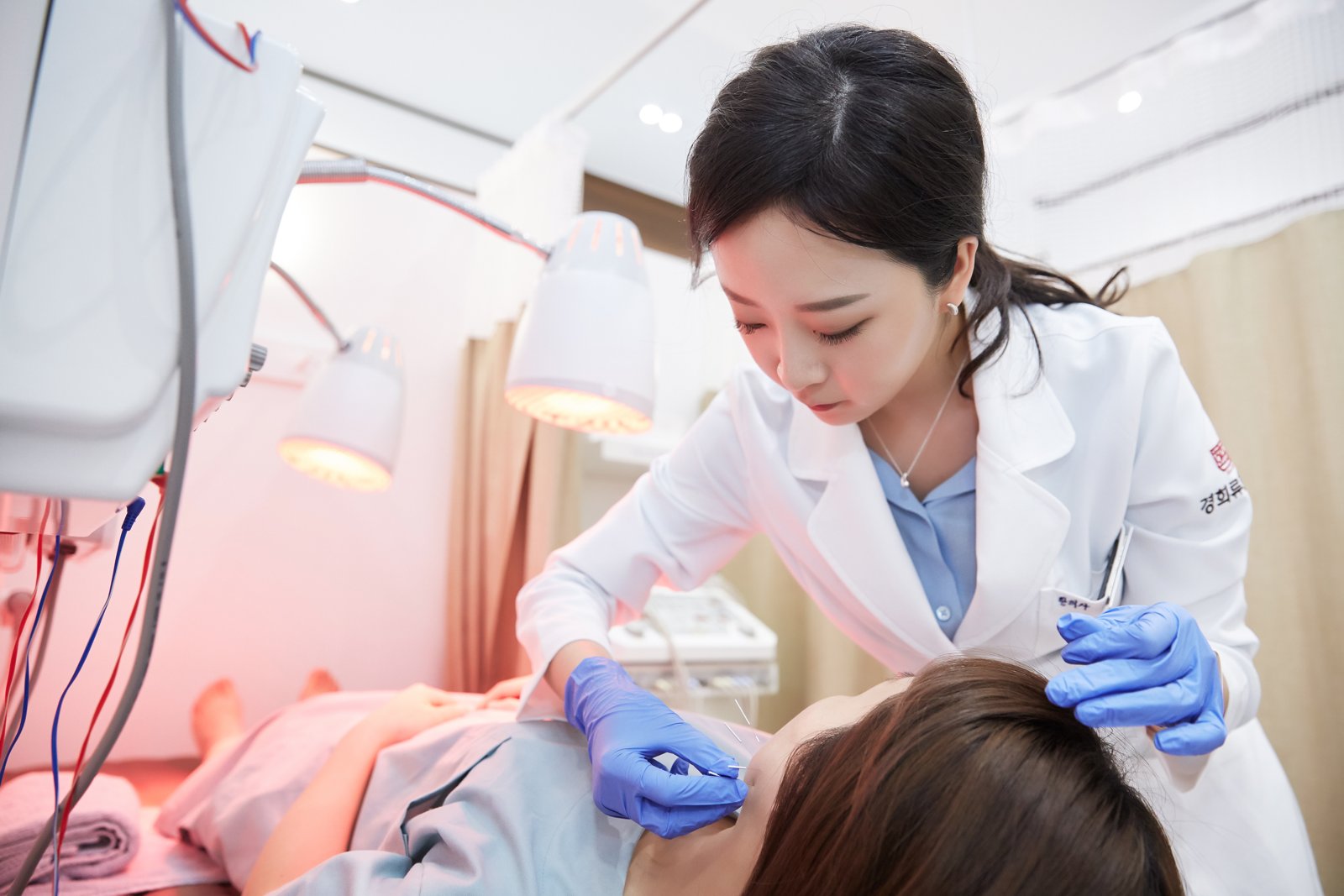
Jeongan Acupuncture (Facial Balancing Acupuncture, 整顔針)
We analyze the alignment of the muscles and skeleton and release stagnant qi and blood in areas that affect the facial line, such as the neck, shoulders, and TMJ. Treatment is performed with an accurate understanding of the facial structure and helps improve asymmetry.
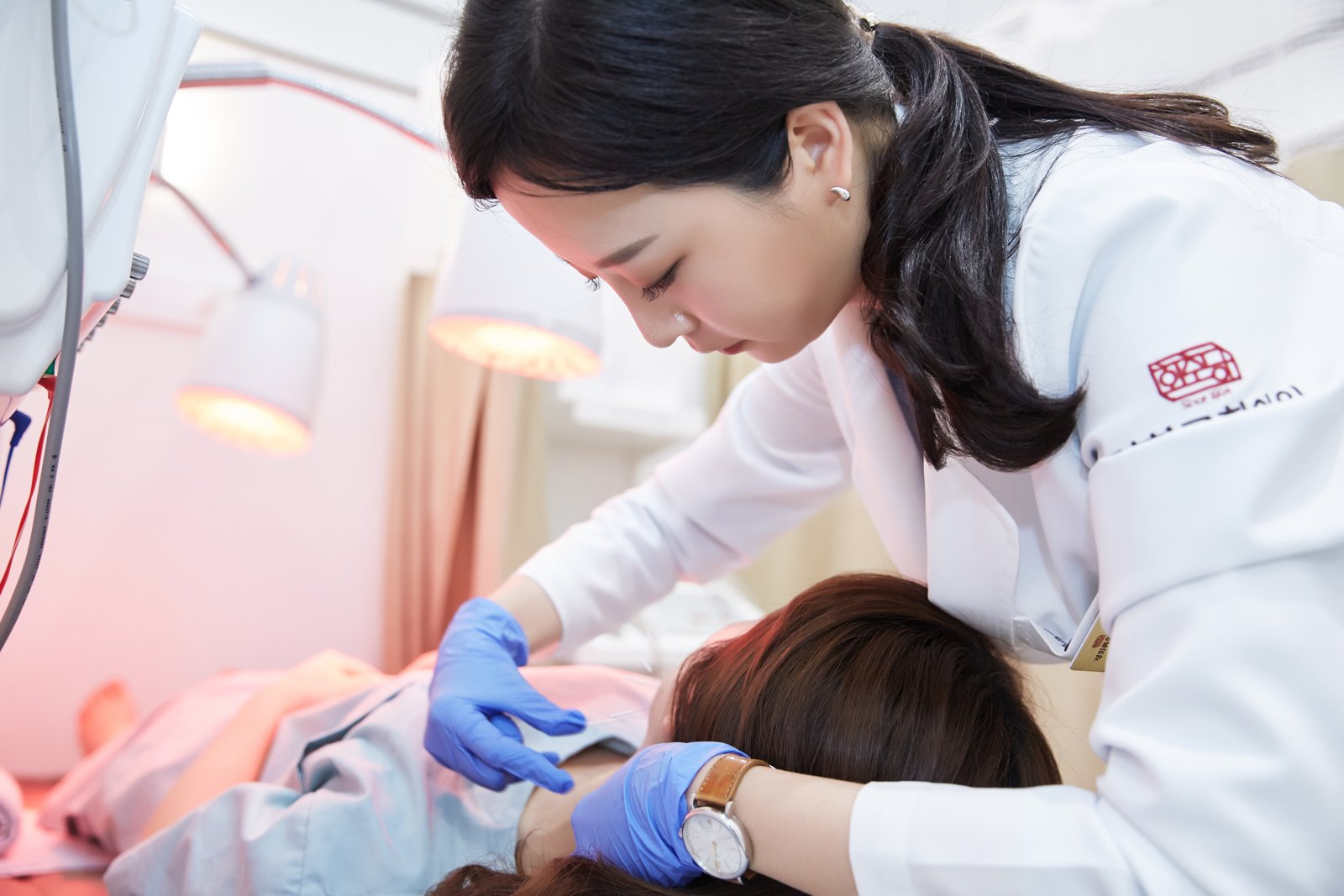
Maeseon Acupuncture
Dissolvable medicinal threads (maeseon threads) are inserted into facial acupuncture points and the SMAS fascial layer under the skin to maintain acupuncture stimulation for longer. This may ease discomfort from sequelae such as stiffness, pulling, and tightness, and help improve contracture and sagging around the sides of the nose, nasolabial folds, marionette lines, eyes, and forehead.
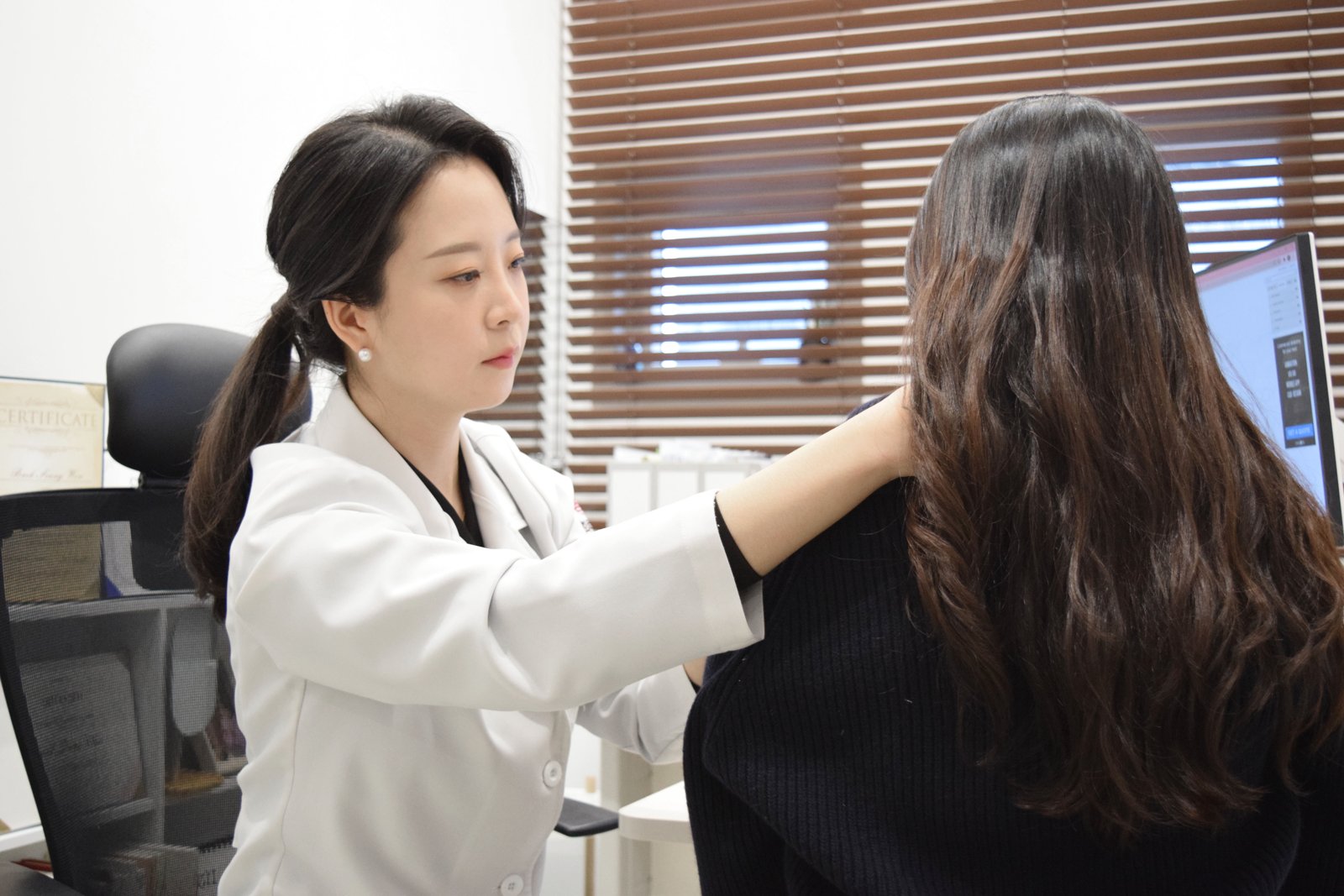
Chuna Manual Therapy for Skeletal Alignment
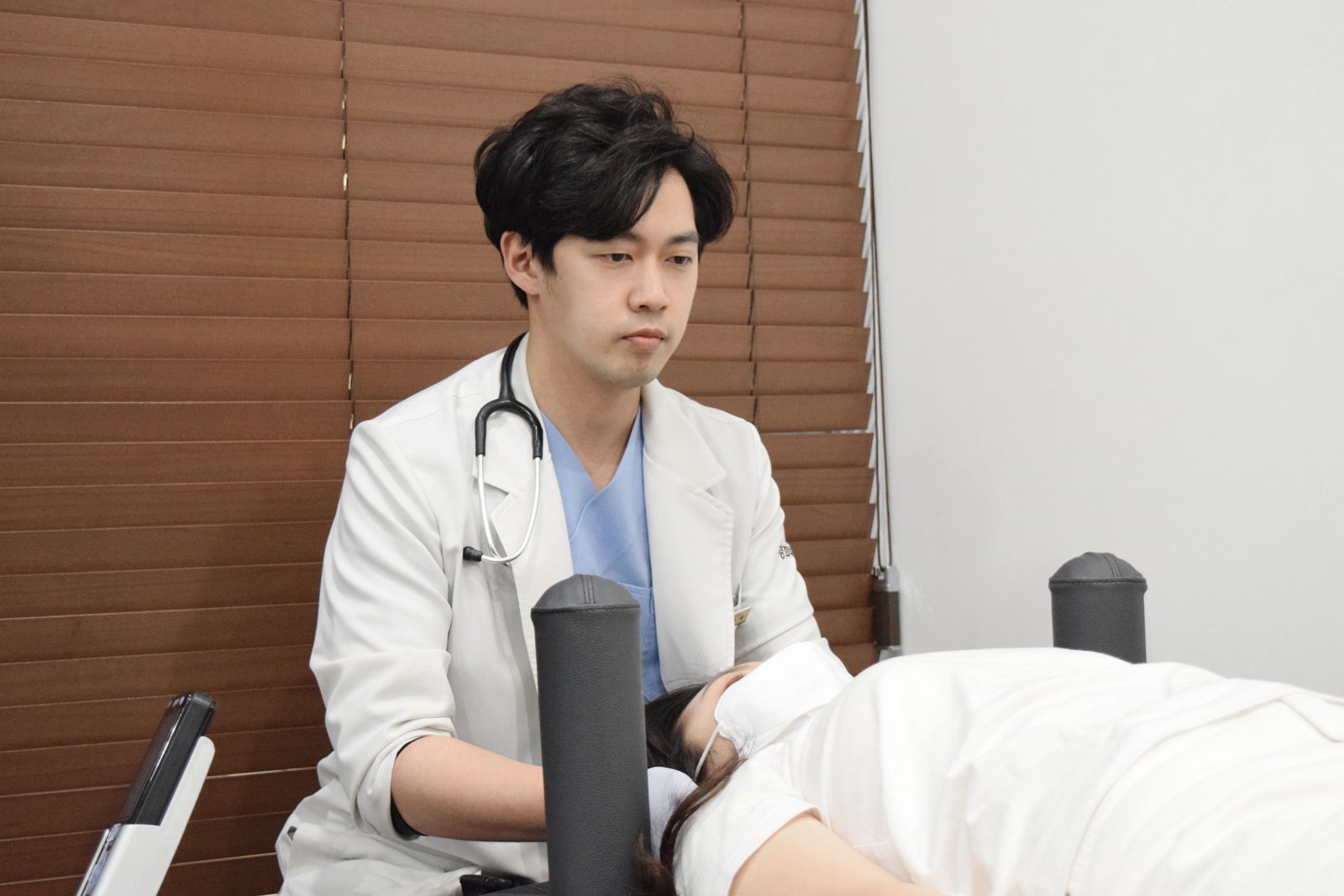
This helps correct asymmetry by addressing misalignment of the spine, pelvis, and TMJ together with overall body imbalance. Delicate pressure control helps reduce tension in the facial muscles.
Acupuncture · Electroacupuncture
Acupuncture is applied to facial-related acupoints to support qi and blood circulation, and Electrical Acupuncture is used to promote nerve recovery. It is performed in a way that reduces the risk of developing synkinesis.
For herbal medicine, pharmacopuncture, and Uwhang Cheongsimwon treatment for acute facial palsy, please see our facial palsy page for details.
05STEPS
Facial palsy, treatment direction by phase
We determine the intensity and frequency of treatment according to the disease phase.
- STEP 1
Acute Phase (First 3–4 Weeks After Onset)
Because the palsy may continue to progress during the first week after onset, it is best to begin treatment as soon as possible. The goal is to reduce nerve inflammation and swelling.
- STEP 2
Recovery Phase (1–3 Months After Onset)
We work to correct asymmetry through nerve regeneration and normalization of the facial muscles.
- STEP 3
Maintenance and Sequelae Phase (After 3–6 Months)
This is the period when sequelae can develop, so treatment tailored to the symptoms is needed. If nerve damage is severe, treatment may be needed for more than 1 year.
06HOW IT WORKS
How Care Proceeds
- 01
Consultation · Examination
We carefully review the pattern of asymmetry, the course of palsy, and lifestyle habits.
- 02
Prognosis Assessment
We develop a treatment plan based on an assessment system that predicts prognosis according to symptom severity.
- 03
Customized Treatment
We determine treatment intensity and frequency according to the degree of damage and the extent of sequelae.
- 04
Lifestyle Management
We provide consultation at each visit and help correct lifestyle habits. Cold wind, overwork, stress, and insomnia can worsen sequelae.
Bringing your blood test, electromyography, and nerve conduction test results can be helpful for your care.
07EXPERTISE
Who provides the treatment?
Training at the Facial Palsy Center, Kyung Hee University Korean Medicine Hospital at Gangdong

4th-Generation Married Korean Medicine Doctors · First Author of an SCI-Level Paper on Women’s Health
Dr. Seungwon Baek, Director
- Entered Sangji University College of Korean Medicine at the top of the class · Graduated salutatorian
- Master’s Program in Clinical Korean Medicine, Kyung Hee University
- Specialist Training Program, Department of Acupuncture and Moxibustion Medicine (Facial Palsy Center · Spine and Joint Center), Kyung Hee University Korean Medicine Hospital at Gangdong
- Certified Korean Medicine Doctor in Korean Medicine Obesity Treatment
Women's HealthDiet & BeautyPediatricsFacial PalsyPain · Traffic Accidents
- Dr. Seungwon Baek, Director completed specialist training in the Department of Acupuncture and Moxibustion at Gangdong Kyung Hee University Korean Medicine Hospital (Facial Palsy Center · Spine and Joint Center).
- Drawing on his experience working at the Facial Palsy Center, he provides systematic treatment from the acute phase through the sequelae phase.
- He participated as a co-author in studies on assessment of sequelae of facial palsy and manual therapy for TMJ disorders.

Related research
A basic study for the development of an objective assessment tool for sequelae of facial palsy using facial scanning
In an evaluation of patients with sequelae of facial palsy using a facial scanning index (FSI), mouth-eye synkinesis, contracture around the mouth and eyes, forehead wrinkles, lip puckering, and wide eye opening showed statistical significance with existing evaluation indices and the Sunnybrook Scale.
Clinical effectiveness of thread-embedding acupuncture in the treatment of Bell's palsy sequelae: A randomized, patient-assessor-blinded, controlled, clinical trial
In a randomized controlled clinical trial of 56 patients with facial palsy lasting more than 3 months who received maeseon treatment for 8 weeks, significant effects were reported in the facial disability index (physical and social function scores such as eating, drinking, speech, tearing, and toothbrushing) and lip length.
A systematic review and meta-analysis of manual therapy for temporomandibular disorders
A meta-analysis of 10 randomized controlled trials reported that the manual therapy group showed significant therapeutic effects and safety in pain and TMJ range of motion compared with the waitlist group and conventional treatment groups (Botox · Western medication).
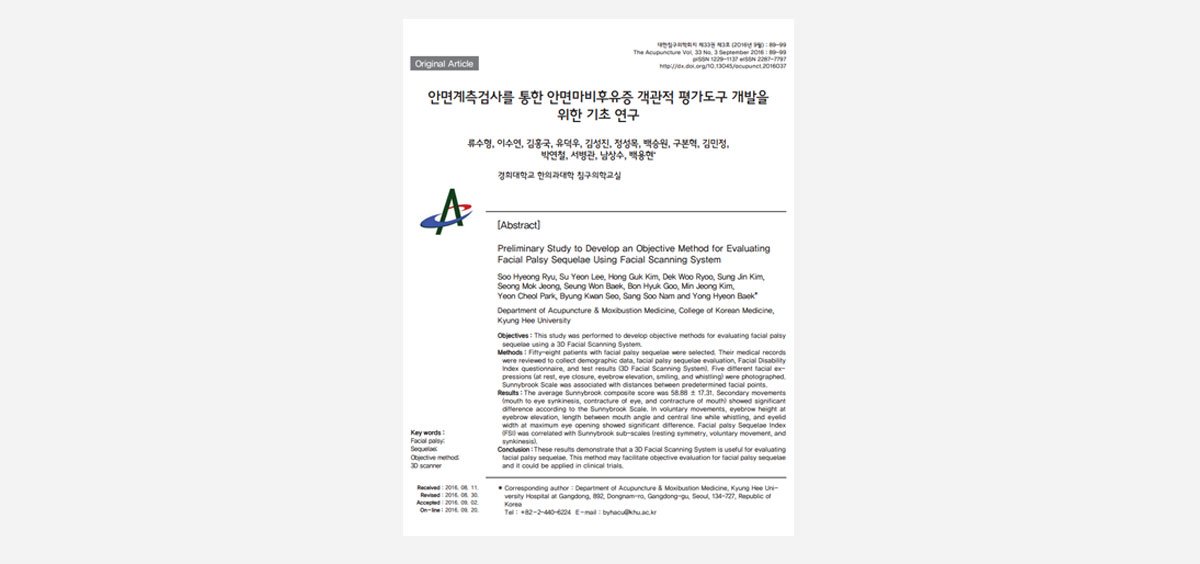
The study figures are results reported in the respective studies and do not guarantee individual treatment effects.
08FAQ
Frequently Asked Questions
QCan long-standing sequelae of facial palsy also be treated?
Sequelae usually appear beginning 3~6 months after onset, and if nerve damage is severe, treatment may be needed for more than 1 year. Even if it takes time, the goal is to reduce discomfort through consistent treatment.
QHow often should I receive treatment?
For early facial palsy, many patients receive treatment daily if possible; from the stable phase, many receive steady treatment 2~3 times per week. The exact frequency is determined according to the degree of damage.
QCan I receive this together with Western medical treatment?
In the early stage, Western medication may need to be used together, and if nerve damage is severe, the prognosis may be better with combined treatment. Please consult us so you do not miss the treatment window due to the misconception that you should not receive Korean medicine treatment.
QDo you also look at TMJ clicking and pain?
Noise or pain in the TMJ when chewing food or opening the mouth is also a target of facial asymmetry treatment. We address alignment together with Chuna Manual Therapy for skeletal alignment.
CONSULTATION
If you are curious about a program suited to your body
We check your current condition with a constitution test and design a 1:1 program for you.
RELATED
Related Care
- Metabolism, Circulation & ParalysisFacial palsy (our clinic)If one side of your face suddenly feels stiff, early treatment is importantLearn more
 Skin Care & AestheticsLifting · ContouringIf your facial contours do not look the way they used to, and you want a natural-looking refinementLearn more
 Pain & Accident RecoveryMusculoskeletal Pain (Our Clinic)If you have been getting by with pain relievers and pain patches, it may be time to look at the causeLearn more
RESERVATION
Facial Asymmetry · Facial Palsy:
start with a consultation
Leave your details and we will contact you in order during clinic hours. First-time visitors are welcome — we start by carefully understanding your current condition.
+82-2-792-1904- Mon · Tue · Wed · Thu09:30 – 19:30
- Fri09:30 – 18:30
- Sat09:30 – 14:30 (open without a lunch break)
- LunchWeekdays 13:30 – 14:30